สะสม NFT Treasure Hunt Season 4 บน Pas.ss ได้แล้ววันนี้
SIX Network ได้ทำการ Migrate คอลเลคชัน NFT Treasure Hunt & Networking Quest Season 4 จากงาน Techsauce Global Summit 2026 มายัง Pas.ss
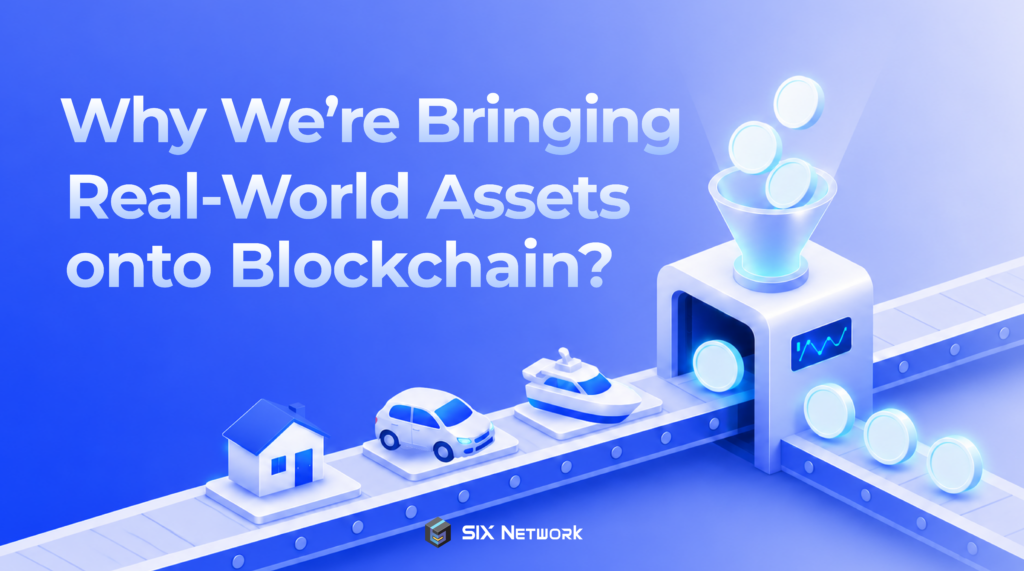
Over the past decade, the global financial system has rapidly shifted toward digitalization. Cross-border transfers that once took several days can now be completed within minutes. Mobile banking and e-wallet payments have become part of everyday life for hundreds of millions of people around the world. Yet while payment infrastructure has evolved quickly, the infrastructure behind asset ownership has moved much more slowly.
Even as the world enters the digital economy era, many assets are still managed through processes that rely heavily on paperwork, intermediaries, and fragmented databases. Ownership transfers still take time, verification often requires multiple parties, and reconciliation between organizations continues to create operational costs, especially for complex assets such as real estate, private funds, or assets involving multiple stakeholders.
In many cases, these inefficiencies do not come from the assets themselves, but from the infrastructure used to manage them. Much of today’s financial infrastructure was designed for a world that was far less interconnected than it is now.
This is one reason why blockchain has started to be viewed differently in recent years. Rather than being seen purely as infrastructure for cryptocurrencies, blockchain is increasingly being explored as a shared infrastructure layer for managing ownership and the movement of assets in a digital economy.
Signals of this shift are becoming more visible at the institutional level. A report from McKinsey & Company estimates that the tokenized asset market could reach approximately $2 trillion by 2030, even under a conservative scenario. Meanwhile, Boston Consulting Group (BCG) previously estimated that tokenized assets could grow into a $16 trillion market within the next decade, representing nearly 10% of global GDP.
What matters about these figures is not only the market size itself, but the fact that major financial institutions and global organizations are increasingly viewing tokenization as a long-term infrastructure trend rather than simply another crypto product category.
What is particularly notable is that this transition is no longer limited to the Web3 industry. Banks, financial institutions, and regulators have all begun experimenting with tokenization across various forms of real-world assets, including bonds, investment funds, and real estate. In many cases, the goal is not to create more tokens, but to reduce the operational friction surrounding how assets are issued, transferred, managed, and verified.
When ownership records move onto blockchain infrastructure, several things begin to change simultaneously. Asset data becomes easier to verify in real time. Ownership transfers can happen without relying on multiple layers of manual processes. The rules and conditions attached to assets can also become programmable from the start.
In practice, this creates opportunities to reduce long-term operational costs while improving coordination between multiple parties involved in the asset lifecycle, including issuers, custodians, investors, and regulators.
Another area gaining attention is accessibility. Traditionally, many forms of investment were available only to large investors because of high minimum capital requirements and rigid ownership structures. Once ownership is represented digitally, however, the same assets can potentially be divided into smaller units more efficiently, creating more flexible forms of participation and investment access.
In this context, blockchain is not simply changing how transactions occur. It is changing how ownership itself can be structured, managed, and exchanged.
The answer is not necessarily about blockchain itself, but about what organizations increasingly need from modern asset infrastructure.
As financial systems become more digital and interconnected, organizations are looking for systems that can:
• provide more transparent ownership structures,
• enable real-time coordination between multiple parties,
• reduce operational complexity,
• and support more flexible forms of asset management over time.
Real estate provides one practical example. In traditional systems, investing in real estate often involves high entry barriers, fragmented ownership records, and operationally heavy management processes. Once ownership structures become digital, however, the same assets can potentially support fractional ownership models, more efficient investor management, and programmable rights tied directly to the asset itself.
In this sense, blockchain is not necessarily replacing existing systems altogether. Instead, it is emerging as a new infrastructure layer that helps make asset management more connected, transparent, and adaptable to a digital economy.
As organizations move deeper into tokenization initiatives, many are discovering that the most difficult challenges are not purely technological.
Bringing real-world assets onto blockchain involves far more than deploying smart contracts. It also requires asset structuring, investor rights management, compliance frameworks, governance design, integration with existing organizational systems, and lifecycle management after issuance.
In many ways, the token itself is only the final output of a much larger process.
The more difficult challenge is building the operational layer that allows real-world assets to function reliably between off-chain systems and on-chain infrastructure.
This is why many organizations are beginning to focus less on blockchain as a transaction tool, and more on the infrastructure frameworks that enable tokenization to operate systematically in real production environments.
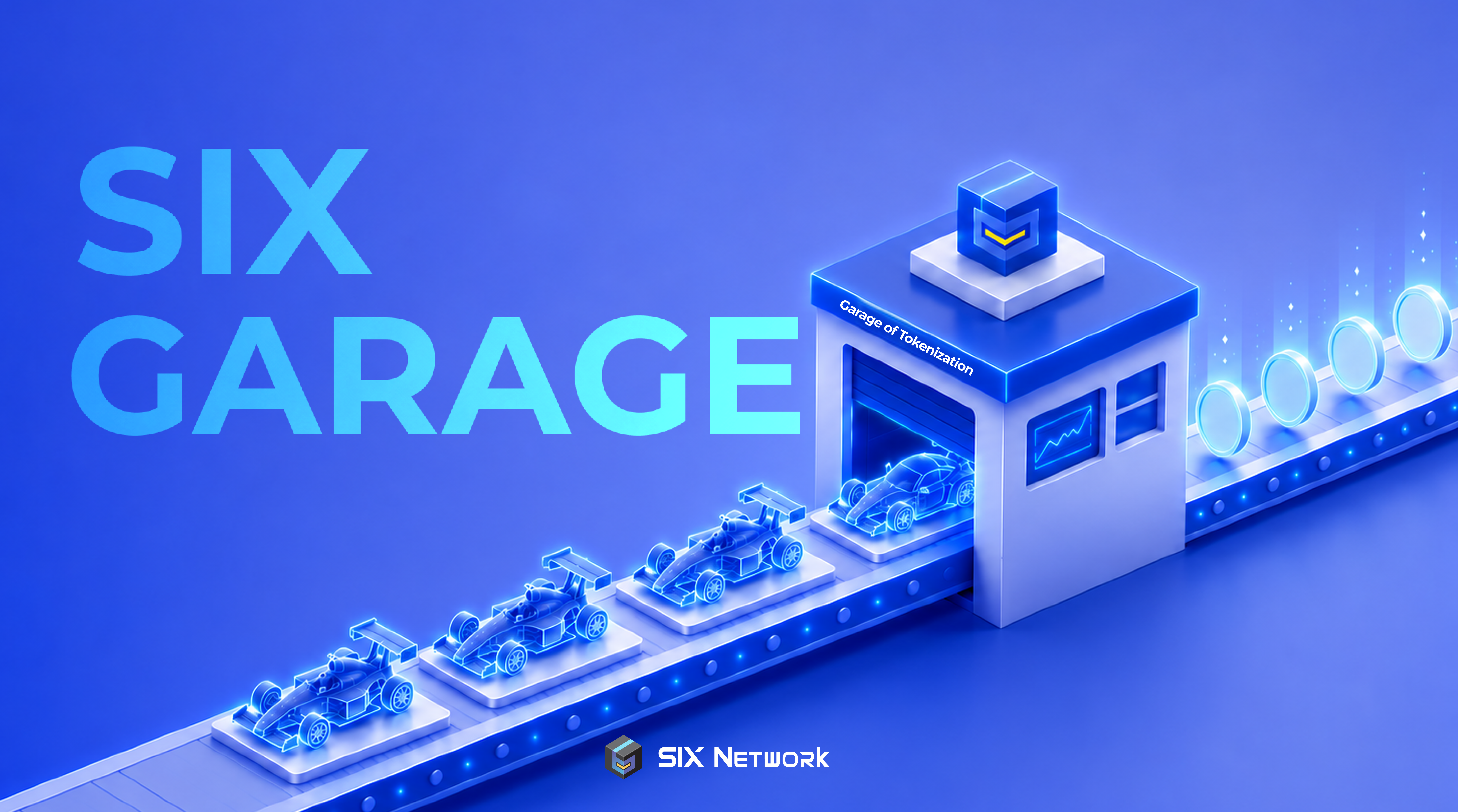
Within the ecosystem of SIX Network, this approach is being developed through SIX Garage, a framework specifically designed for Real-World Asset tokenization.
If SIX Protocol serves as the underlying blockchain infrastructure, SIX Garage functions as the operational layer that helps organizations bring real-world assets onto blockchain in a more structured and manageable way. This includes asset structuring, governance configuration, token holder management, compliance design, token issuance systems, and post-issuance asset administration.
This framework has already been applied through projects such as KAVALON and SiriHub2, reflecting how tokenization is gradually moving beyond experimental pilots and toward infrastructure that can support real organizational use cases.
In many ways, what is happening today may not simply be the growth of digital assets, but the gradual transformation of ownership infrastructure itself, from fragmented systems into more connected, transparent, and interoperable digital frameworks.
And in the long run, this transition may not be driven by the platforms generating the most attention, but by the infrastructure layers capable of helping real-world assets move into digital systems in a practical and sustainable way.

SIX Network ได้ทำการ Migrate คอลเลคชัน NFT Treasure Hunt & Networking Quest Season 4 จากงาน Techsauce Global Summit 2026 มายัง Pas.ss
SIX Network has officially migrated the NFT Treasure Hunt & Networking Quest Season 4 collection from Techsauce Global Summit 2026
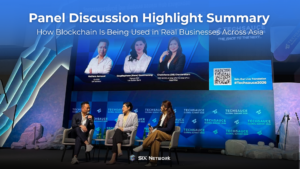
SIX Network joined representatives from Lao Bullion Bank (LBB) and Wise SPV to exchange perspectives on how Blockchain Infrastructure and
SIX Network ร่วมแลกเปลี่ยนมุมมองกับตัวแทนจาก Lao Bullion Bank (LBB) และ Wise SPV ถึงการนำ Blockchain Infrastructure และ RWA Tokenization ไปใช้ในภาคธุรกิจจริง โดยครอบคลุมประสบการณ์จากทั้งฝั่งเทคโนโลยี สถาบันการเงิน และอสังหาริมทรัพย์
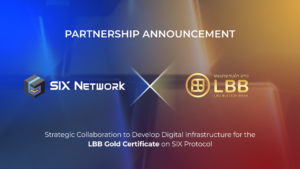
SIX Network announces a partnership with Lao Bullion Bank (LBB), a specialized gold bank in Lao PDR, to jointly develop
Blockchain adoption in business may begin with a single project, but what moves the technology beyond experimentation and into real-world