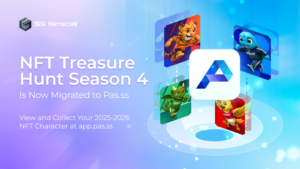
สะสม NFT Treasure Hunt Season 4 บน Pas.ss ได้แล้ววันนี้
SIX Network ได้ทำการ Migrate คอลเลคชัน NFT Treasure Hunt & Networking Quest Season 4 จากงาน Techsauce Global Summit 2026 มายัง Pas.ss


SIX Network ได้ทำการ Migrate คอลเลคชัน NFT Treasure Hunt & Networking Quest Season 4 จากงาน Techsauce Global Summit 2026 มายัง Pas.ss
SIX Network has officially migrated the NFT Treasure Hunt & Networking Quest Season 4 collection from Techsauce Global Summit 2026
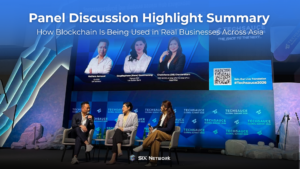
SIX Network joined representatives from Lao Bullion Bank (LBB) and Wise SPV to exchange perspectives on how Blockchain Infrastructure and
SIX Network ร่วมแลกเปลี่ยนมุมมองกับตัวแทนจาก Lao Bullion Bank (LBB) และ Wise SPV ถึงการนำ Blockchain Infrastructure และ RWA Tokenization ไปใช้ในภาคธุรกิจจริง โดยครอบคลุมประสบการณ์จากทั้งฝั่งเทคโนโลยี สถาบันการเงิน และอสังหาริมทรัพย์
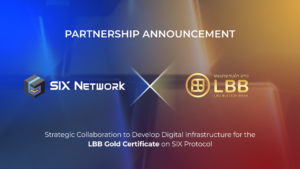
SIX Network announces a partnership with Lao Bullion Bank (LBB), a specialized gold bank in Lao PDR, to jointly develop
Blockchain adoption in business may begin with a single project, but what moves the technology beyond experimentation and into real-world