fbpx

Exploring the Growth of RWA in Thailand: How Ready Is the Market?

Exploring the Growth of RWA in Thailand: How Ready Is the Market?

Exploring the Growth of RWA in Thailand: How Ready Is Thailand’s Market for a $30Billion+ On-Chain RWA Economy?

How Ready Is Thailand’s Market for a $30Billion+ On-Chain RWA Economy?

Thailand’s digital asset market throughout 2025 and into early 2026 has begun showing increasingly meaningful signals regarding the growth of RWA tokenization, particularly in asset categories with clear underlying value such as real estate. The market is beginning to demonstrate both investor demand and the ability for large-scale projects to materialize in practice.


One of the clearest signals of this shift is the SiriHub2 Token project, which raised 2.49 billion baht and completed its offering within only a few days through XSpring Digital as its ICO portal. At the same time, XSpring Digital’s total fundraising volume in 2025 surpassed 2.89 billion baht (Nation Thailand, December 2025). These figures reflect that demand for tokenized assets in Thailand is real and may be stronger than many initially expected during the early stages of market development.


Prior to this, there were also projects developed in collaboration with SIX Network within the real estate sector, where asset value has been issued and managed on SIX Protocol. This reflects how the Thai market is beginning to move beyond the pilot project stage toward blockchain-based projects that can operate at a meaningful scale in practice.


Why Is Thailand Interested in RWA?

Thailand possesses several structural advantages that support RWA tokenization simultaneously. These include a large real estate market with relatively low liquidity through traditional channels, growing familiarity with digital assets among both institutional and retail investors, and a regulatory environment that is increasingly laying the groundwork for asset tokenization in a more meaningful way. At the same time, emerging markets tend to adopt digital rails faster than economies that remain more dependent on legacy financial infrastructure, placing Thailand in a relatively advantageous position (Cointelegraph, 2025).


The Market Is Opening, but Asset Classes Remain Limited

One notable observation in Thailand today is that RWA tokenization projects have already emerged in the real estate sector. However, other asset classes that are expanding rapidly in global markets, including government bonds, equities, fixed income products, and commodities, have yet to develop at a similar level in Thailand. At the same time, this presents an opportunity for a growing market with room for expansion, supported by increasingly clearer regulatory frameworks and market structures.


From SIX Network’s perspective, projects such as KAVALON Token and SiriHub2 provide practical examples of real estate-based RWA tokenization in Thailand. Both projects achieved 100% subscription completion, reflecting that demand for this asset category already exists in the Thai market. The next stage of growth may increasingly involve expanding the range of supported asset classes, including debt instruments, bonds, funds, and alternative assets that are already gaining momentum in global tokenization markets.


Looking ahead, Thailand’s market may begin to see broader asset diversity alongside a regulatory framework that gradually becomes more defined in line with the evolution of digital capital markets. As investor demand and infrastructure continue developing together, tokenization may increasingly evolve from a niche investment product into a more integrated part of digital asset management systems.


Sources:
– Nation Thailand “XSpring Digital Reaffirms Its Position as Thailand’s No. 1 ICO Portal” (December 2025)
– Cointelegraph “Developing Economies To Drive RWA Tokenization Train in 2026” (December 2025)

Follow every update at
Website: https://six.network/
X: https://x.com/theSIXnetwork
FB: https://www.facebook.com/thesixnetwork/


And our community channels:

Discord: http://discord.gg/sixnetwork
Telegram: https://t.me/+0BmqYVoV5j5lN2Jl

⎯⎯⎯⎯⎯⎯⎯⎯⎯⎯⎯⎯⎯⎯⎯⎯⎯⎯⎯⎯⎯⎯⎯⎯⎯⎯⎯⎯⎯⎯⎯⎯

Disclaimer:

1.This article is intended for informational purposes only. Please conduct your own research before making any investment decisions related to cryptocurrencies 2. Cryptocurrency and digital token involve high risk; investors may lose all investment money and should study information carefully and make investments according to their own risk profile.


Thailand’s SEC Has Published a Roadmap to Drive Asset Tokenization
SIX Network Has the RWA Infrastructure Ready

Don’t miss out follow us at:

Warisara Thepsiri
Warisara Thepsiri

Experience the magic of Blockchain with SIX Network!

Related Posts

RWA Is Entering Phase 2: From Tokenized Assets to Real Utility

RWA Is Entering Phase 2: From Tokenized Assets to Real Utility

RWA Is Entering Phase 2: From Tokenized Assets to Real Utility — How SIX Network Is Preparing for the Next Phase of Tokenization

How SIX Network Is Preparing for the Next Phase of Tokenization

By 2026, economic analysts will have increasingly aligned on one view: RWA tokenization is entering Phase 2, a period defined by meaningful adoption and practical usage of tokenized assets. Before exploring what comes next, it is worth looking back at what happened during Phase 1, what the market may need to prepare for in the transition toward Phase 2, and how SIX Network, as RWA infrastructure, is preparing for this next stage of adoption.


Phase 1 Was About Bringing Real-World Assets On-Chain


Between 2022 and 2024, much of the activity surrounding RWAs focused on proving that real-world assets could exist on blockchain within legal and regulatory frameworks. During this period, a growing number of assets were tokenized and traded, ranging from government bonds and private credit funds to real estate. The value of these real-world assets became increasingly reflected on the blockchain networks that supported their issuance and management.


SIX Protocol has experienced similar developments through projects such as SiriHub2, a real estate-backed token project with a total offering value of 2.49 billion baht. The value of these underlying assets is minted and represented as tokens on the SIX Protocol blockchain.


However, Phase 2, which is beginning to emerge this year, is expected to look fundamentally different. According to analysts, this stage is increasingly defined by adoption that allows tokenized assets to become genuinely usable rather than simply issued and held (NFT News Today, May 2026).


When One Asset Can Perform Multiple Functions at Once


One of the clearest examples comes from Standard Chartered, BlackRock, and OKX, which recently introduced a framework allowing investors to use BlackRock’s BUIDL, a tokenized U.S. Treasury product, as collateral for trading directly on OKX. In traditional systems, holding an asset for yield generation and using the same asset for trading activities typically occur separately. Tokenization changes this dynamic. A single asset can simultaneously generate yield, support trading activity as collateral, and move value across digital systems at the same time.


Why Phase 2 Matters for SIX Network


For SIX Network, Phase 2 represents broader opportunities in both use cases and partnerships with organizations seeking to tokenize real-world assets. As more assets move on-chain and become increasingly functional, infrastructure capable of supporting the full lifecycle of tokenized assets becomes more important. SIX Garage was designed with this transition in mind, supporting everything from compliance verification and cap table tracking to on-chain corporate action management.


At the same time, the regulatory environment in Thailand remains an important consideration. Existing legal frameworks may still limit the immediate adoption of use cases such as yield stacking or collateral mobility, which are beginning to emerge in markets such as the United States. In the near term, more practical developments are likely to come through clearer investment and trading conditions as Thailand’s SEC continues laying the regulatory groundwork for digital assets and tokenization.


Phase 2 is only beginning, and infrastructure needs to be ready before institutional capital arrives.


Sources: NFT News Today, “RWA Tokenization Enters Phase 2: From Issued Assets to Usable Portfolios” (May 7, 2026) 

Follow every update at
Website: https://six.network/
X: https://x.com/theSIXnetwork
FB: https://www.facebook.com/thesixnetwork/


And our community channels:

Discord: http://discord.gg/sixnetwork
Telegram: https://t.me/+0BmqYVoV5j5lN2Jl

⎯⎯⎯⎯⎯⎯⎯⎯⎯⎯⎯⎯⎯⎯⎯⎯⎯⎯⎯⎯⎯⎯⎯⎯⎯⎯⎯⎯⎯⎯⎯⎯

Disclaimer:

1.This article is intended for informational purposes only. Please conduct your own research before making any investment decisions related to cryptocurrencies 2. Cryptocurrency and digital token involve high risk; investors may lose all investment money and should study information carefully and make investments according to their own risk profile.


Thailand’s SEC Has Published a Roadmap to Drive Asset Tokenization
SIX Network Has the RWA Infrastructure Ready

Don’t miss out follow us at:

Warisara Thepsiri
Warisara Thepsiri

Experience the magic of Blockchain with SIX Network!

Related Posts

Institutional Capital Is Moving Into RWAs

Institutional Capital Is Moving Into RWAs

Institutional Capital Is Moving Into RWAs, and SIX Network Preparing Infrastructure for Institutional-Scale Tokenization

Institutional Capital Is Flowing Into RWAs
Is Your Infrastructure Ready for Institutional Standards? 

The rapid growth of the RWA tokenization market, from $5.5 billion in early 2025 to $29.2 billion by April 2026 (Spotedcrypto, 2026), reflects a clear structural shift in global financial markets. A major driver behind this growth has been tokenized private credit, where private lending products are issued as tokens on blockchain and offer on-chain yields ranging from 4% to 10% annually. Institutional investors are already familiar with this asset class and have begun allocating capital into it in a meaningful way, moving beyond the stage of research or experimentation.


As institutional-scale capital enters the RWA market, expectations for infrastructure become significantly different from those of retail users.


The Standards Institutional Investors Expect


Financial institutions are not primarily looking for the fastest blockchain or the lowest transaction fees. What they require are auditable compliance systems, transparent and accurate token holder registries, mechanisms that can automatically enforce jurisdiction-specific requirements, and corporate action execution, such as yield distributions, directly on-chain without relying on intermediaries. Funds managing third-party capital cannot allocate assets into systems that lack a clear audit trail.


SIX Network’s 2026 Roadmap and Institutional Assets

SIX Network’s 2026 roadmap clearly identifies Expanding Institutional Assets as one of its key priorities for the year. This direction reflects ongoing discussions and collaboration with institutional-grade projects seeking to bring real-world assets on-chain in a meaningful way. SIX Garage supports automated compliance across multiple jurisdictions, real-time token holder registries, permissioned transfers, and on-chain corporate action management. These capabilities are already being utilized in Thailand through projects such as KAVALON and SiriHub2, serving as operational infrastructure rather than theoretical feature lists.


As Institutional Capital Arrives in Southeast Asia


Emerging market economies are increasingly expected to leapfrog legacy financial infrastructure and adopt digital rails, including stablecoin settlement, more rapidly than markets with deeply embedded legacy systems (Cointelegraph, Jesse Knutson, Bitfinex, December 2025). This creates structural advantages for regions such as Southeast Asia and Thailand in capturing the next wave of digital asset adoption. SIX Protocol has been building infrastructure aligned with institutional requirements from the beginning, while the market is now increasingly moving toward the type of systems designed to support this transition.


Source: Spotedcrypto, 2026 

Follow every update at
Website: https://six.network/
X: https://x.com/theSIXnetwork
FB: https://www.facebook.com/thesixnetwork/


And our community channels:

Discord: http://discord.gg/sixnetwork
Telegram: https://t.me/+0BmqYVoV5j5lN2Jl


• Read the full SIX Network Roadmap 2026: Click

• SIX Network Q1 2026 Summary: Read

⎯⎯⎯⎯⎯⎯⎯⎯⎯⎯⎯⎯⎯⎯⎯⎯⎯⎯⎯⎯⎯⎯⎯⎯⎯⎯⎯⎯⎯⎯⎯⎯

Disclaimer:

1.This article is intended for informational purposes only. Please conduct your own research before making any investment decisions related to cryptocurrencies 2. Cryptocurrency and digital token involve high risk; investors may lose all investment money and should study information carefully and make investments according to their own risk profile.


Thailand’s SEC Has Published a Roadmap to Drive Asset Tokenization
SIX Network Has the RWA Infrastructure Ready

Don’t miss out follow us at:

Warisara Thepsiri
Warisara Thepsiri

Experience the magic of Blockchain with SIX Network!

Related Posts

Luxury Assets Are Coming On-Chain

Luxury Assets Are Coming On-Chain

Luxury Assets Are Coming On-Chain Are luxury brands really making their way back into the blockchain world?

Last week, the Swatch x AP Royal Pop collection sparked a wave of excitement across the crypto space. Major projects like Solana, MEXC, and CoinMarketCap all jumped in by creating parody images that quickly turned into memes across platform X. Although this watch launch may not be tokenization in the true sense, it signals that luxury assets are gaining traction in the blockchain world and may be making their way back on-chain. So what does this trend mean for SIX Network?


Real Use Cases That Have Already Happened Luxury Assets x Blockchain


Even though Solana’s parody images of the Swatch collection generated buzz across Web3 without being an actual collaboration, did you know that just a few years ago, there were real collaborations between luxury watch brands and well-known blockchains? From 2022 to 2025, NFTs were at their peak, marking a period when real-world assets began connecting with blockchain, and many notable brands started experimenting with this. So which brands brought their assets into tokenization? Let’s take a look.


Franck Muller x Solana Watch Collection

Franck Muller x Solana Watch Collection

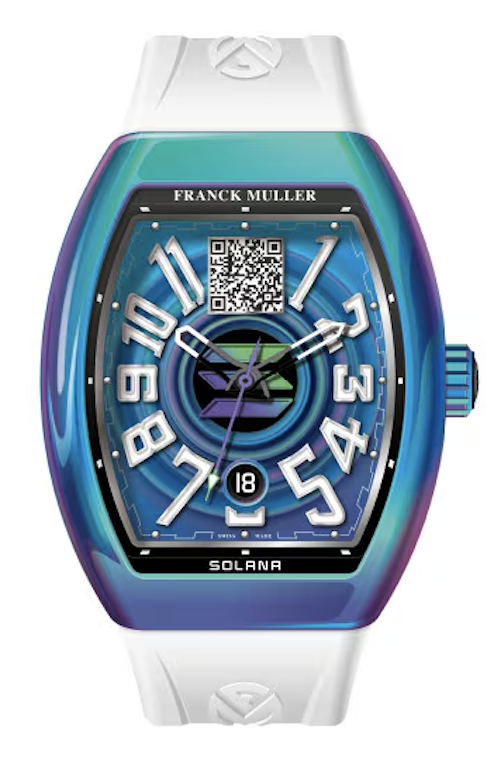
In May 2025, Franck Muller, the Swiss luxury watchmaker, launched a limited edition collection of 1,111 timepieces priced at 20,000 Swiss francs, approximately $24,300 each. Every piece features a QR code embedded at the 12 o’clock position, linking directly to the owner’s personal Solana wallet.


Franck Muller called this product phygital a blend of the words physical and digital. Each watch grants the owner access to exclusive events, early access to new projects, and curated on-chain experiences.


What Franck Muller did was prove ownership through blockchain and connect a physical object to the holder’s digital identity. While this is not yet full tokenization, it marks an interesting first step for a luxury brand entering the on-chain world.


VP Bank x Huber x AP
Creating Real Watch Ownership Rights on Blockchain

VP Bank x Huber x AP 
Creating Real Watch Ownership Rights on Blockchain


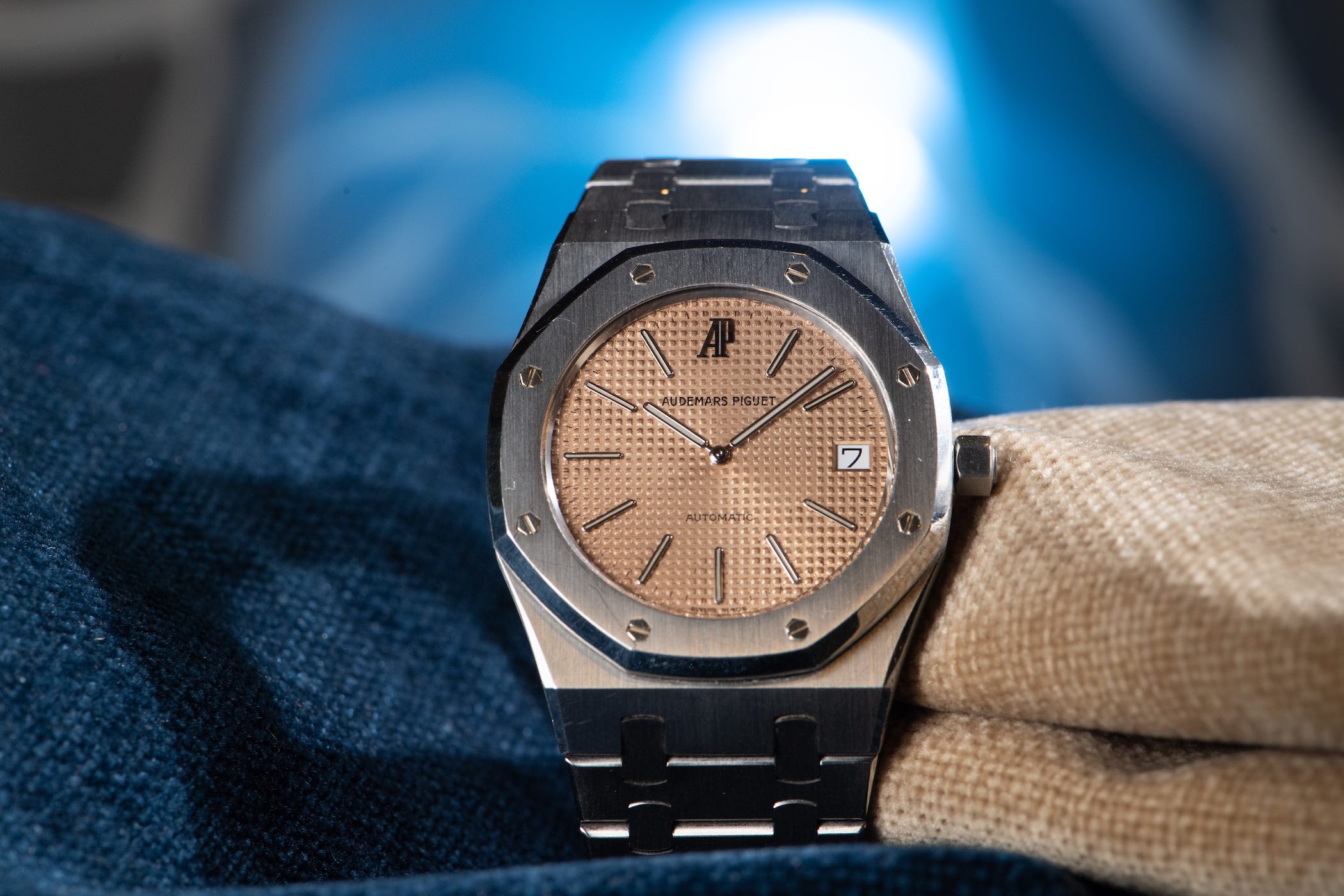
In 2022, VP Bank partnered with Huber, a watch retailer in Liechtenstein, to tokenize an Audemars Piguet Royal Oak ref. 14802ST, which Norman J. Huber had owned for 30 years, became the first watch ever tokenized on blockchain in Liechtenstein.


Thomas von Hohenhau from VP Bank and Hansjoerg Roshard from Huber explained that tokenization is the process of mapping real-world rights onto a digital blockchain. In the case of this watch, the tokens represent ownership rights, meaning the token holder is the legal owner of the underlying watch. For the first time, ownership rights to a real asset could be processed, transferred, and divided.


This is the tokenization model closest to what SIX Network does, because it is not simply linking an object to a wallet, but creating genuine ownership rights on a blockchain backed by a legal framework.


So Can SIX Network’s Tokenization Do This?


The answer is yes. SIX Network has SIX Garage, a tokenization suite that supports bringing real-world assets of any type onto blockchain, covering everything from asset verification and token structure design to compliance configuration according to applicable legal frameworks.


On the investor engagement side, just as Franck Muller’s collection grants exclusive privileges to watch owners, SIX has Pas.ss, a dedicated platform for managing token holder privileges. It works at both the proof-of-ownership level and the full tokenized asset level, depending on the structure of each project.


Why Watches Are a Strong Fit for Tokenization


Luxury watches possess qualities that make tokenization especially valuable, high value, naturally high scarcity, and a secondary market that is deeply illiquid. Transferring ownership of a watch worth hundreds of thousands of baht through conventional means is slow, complicated, and lacks transparency. Tokenization makes everything on-chain, fully traceable, and divisible into fractional ownership when needed.

VP Bank noted that one of the strongest use cases for tokenization is when a collector wants to pass a collection to the next generation; tokens become the ideal mechanism for distributing the collection equally among all beneficiaries as co-owners.

Watches are one of many luxury asset types moving in this direction, alongside fine art, wine collections, and premium real estate. The infrastructure that will support this wave needs to be ready before the wave arrives.


Beyond luxury brand assets returning to blockchain, what other asset types will we explore through the lens of tokenization next?

Stay tuned for what’s coming soon.

Follow every update at
Website: https://six.network/
X: https://x.com/theSIXnetwork
FB: https://www.facebook.com/thesixnetwork/


And our community channels:

Discord: http://discord.gg/sixnetwork
Telegram: https://t.me/+0BmqYVoV5j5lN2Jl


• Read the full SIX Network Roadmap 2026: Click

• SIX Network Q1 2026 Summary: Read

⎯⎯⎯⎯⎯⎯⎯⎯⎯⎯⎯⎯⎯⎯⎯⎯⎯⎯⎯⎯⎯⎯⎯⎯⎯⎯⎯⎯⎯⎯⎯⎯

Disclaimer:

1.This article is intended for informational purposes only. Please conduct your own research before making any investment decisions related to cryptocurrencies 2. Cryptocurrency and digital token involve high risk; investors may lose all investment money and should study information carefully and make investments according to their own risk profile.


Thailand’s SEC Has Published a Roadmap to Drive Asset Tokenization
SIX Network Has the RWA Infrastructure Ready

Don’t miss out follow us at:

Warisara Thepsiri
Warisara Thepsiri

Experience the magic of Blockchain with SIX Network!

Related Posts

SIX Network Prepares RWA Infrastructure as Thailand Moves Toward Asset Tokenization

SIX Network Prepares RWA Infrastructure as Thailand Moves Toward Asset Tokenization

SIX Network Prepares RWA Infrastructure as Thailand Moves Toward Asset Tokenization

Thailand’s blockchain industry is moving seriously toward the development of asset tokenization. Signals are emerging from multiple directions, including businesses bringing more real-world assets onto blockchain, institutional investors showing growing interest, and the Thai blockchain industry becoming more prepared with infrastructure than ever before.


Most recently, during the Thailand Digital Asset Leadership Forum: Road to SEABW, Thailand’s SEC announced a three-year strategy built around three key pillars: driving asset tokenization, unlocking crypto as an asset class, and strengthening regulatory oversight.


Within this roadmap, the first pillar is particularly significant for SIX Network and the future of RWA. It signals that blockchain technology is likely to be increasingly applied to traditional financial assets and various asset classes, including government bonds, equities, debt instruments, and mutual funds. This represents a structural shift in how Thailand is beginning to recognize the value of bringing assets onto blockchain.


The Growing Momentum of RWA in Thailand


The next phase is expected to include legal frameworks covering token issuance, trading, and the use of tokenized assets as collateral. This means the overall value chain of RWA tokenization is beginning to receive formal recognition under Thailand’s regulatory framework.


Another important factor is timing. Over the past two years, global institutional players such as BlackRock, Franklin Templeton, and other major asset managers have already been moving toward tokenizing real-world assets on blockchain. The direction of Thailand’s blockchain industry is now aligning more closely with the same institutional movement taking place globally.


For companies building RWA infrastructure in Thailand, this movement creates greater regulatory clarity and opens opportunities for a broader range of assets to move onto blockchain.


Strongly Aligned With SIX Network’s Tokenization Direction


As many have already seen, SIX Network has been continuously developing RWA infrastructure that is now ready to support asset tokenization.


These components have always been essential for building a functioning RWA ecosystem, including blockchain infrastructure through SIX Protocol and SIX Garage, a platform designed for converting real-world assets into digital assets.


SIX Protocol serves as the core blockchain infrastructure layer and supports regulatory requirements through automated on-chain compliance verification systems, enabling tokenized assets to operate across multiple jurisdictions more efficiently.


SIX Garage functions as a tokenization suite for transforming real-world assets into digital assets through compliance verification, token structure design, token holder registry setup, and blockchain deployment, with support for issuing tokenized financial assets.


Our infrastructure already supports real-world projects operating on SIX Protocol, including:

• KAVALON Token, valued at more than 400 million THB, was developed in collaboration with AssetWise and XSpring Digital, which was fully subscribed during its private placement phase


• SiriHub2, a real estate-backed investment digital token project valued at 2.49 billion THB on SIX Protocol


These projects reflect Thailand’s progress in asset tokenization and demonstrate that the country’s RWA infrastructure is more advanced than much of the market currently realizes.


What to Watch Over the Next 12 Months


As Thailand begins preparing to accelerate RWA tokenization, the next year could bring much clearer developments across regulation, institutional participation, and the introduction of new asset classes on blockchain.


What will matter may not simply be the number of projects entering the market, but the types of assets increasingly moving on-chain, ranging from bonds and private assets to real estate and other financial instruments. This will continue increasing the importance of blockchain infrastructure at the structural level of capital markets.


SIX Network sees this period as a major transition point for the digital asset industry, and the SIX Protocol ecosystem is continuing to evolve to support the long-term growth of institutional-grade assets through scalability, reliability, and infrastructure designed for real-world asset tokenization.

Follow every update at
Website: https://six.network/
X: https://x.com/theSIXnetwork
FB: https://www.facebook.com/thesixnetwork/


And our community channels:

Discord: http://discord.gg/sixnetwork
Telegram: https://t.me/+0BmqYVoV5j5lN2Jl


• Read the full SIX Network Roadmap 2026: Click

• SIX Network Q1 2026 Summary: Read

⎯⎯⎯⎯⎯⎯⎯⎯⎯⎯⎯⎯⎯⎯⎯⎯⎯⎯⎯⎯⎯⎯⎯⎯⎯⎯⎯⎯⎯⎯⎯⎯

Disclaimer:

1.This article is intended for informational purposes only. Please conduct your own research before making any investment decisions related to cryptocurrencies 2. Cryptocurrency and digital token involve high risk; investors may lose all investment money and should study information carefully and make investments according to their own risk profile.


Thailand’s SEC Has Published a Roadmap to Drive Asset Tokenization
SIX Network Has the RWA Infrastructure Ready

Don’t miss out follow us at:

Warisara Thepsiri
Warisara Thepsiri

Experience the magic of Blockchain with SIX Network!

Related Posts

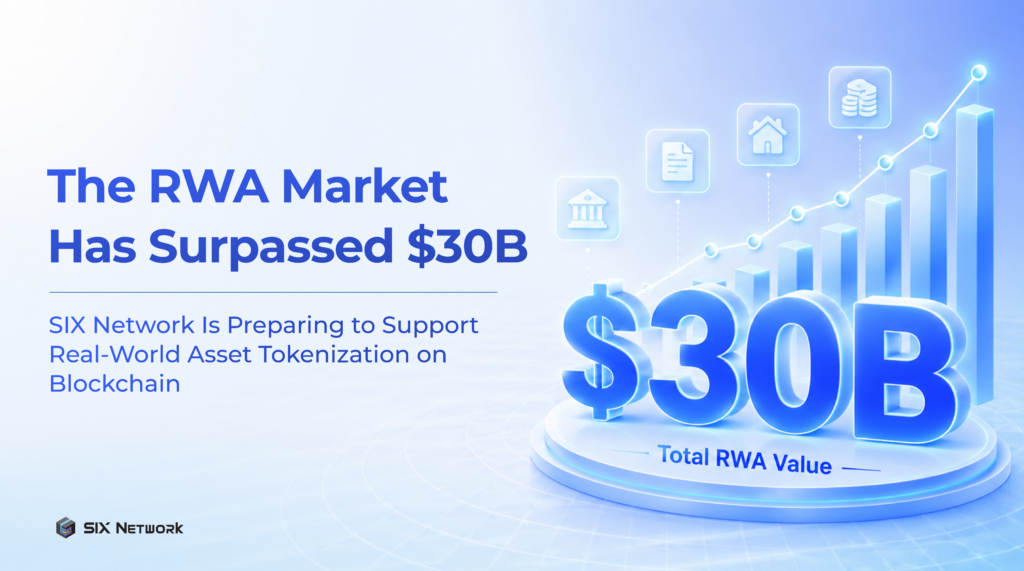
RWA Has Surpassed $30B | SIX Network Expanding to Support RWA on Blockchain

RWA Has Surpassed $30B | SIX Network Expanding to Support RWA on Blockchain

The on-chain asset market is growing faster
than many expected


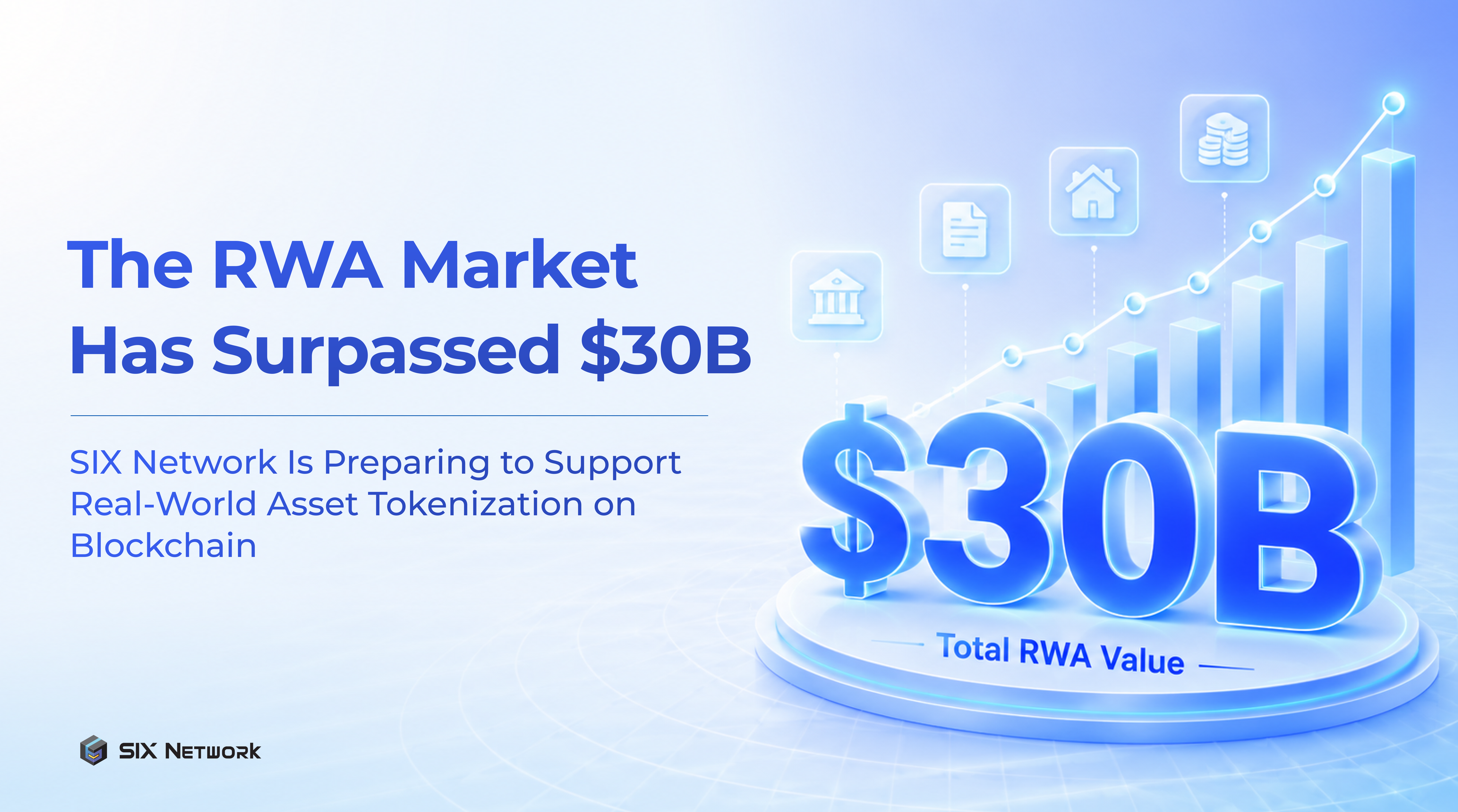
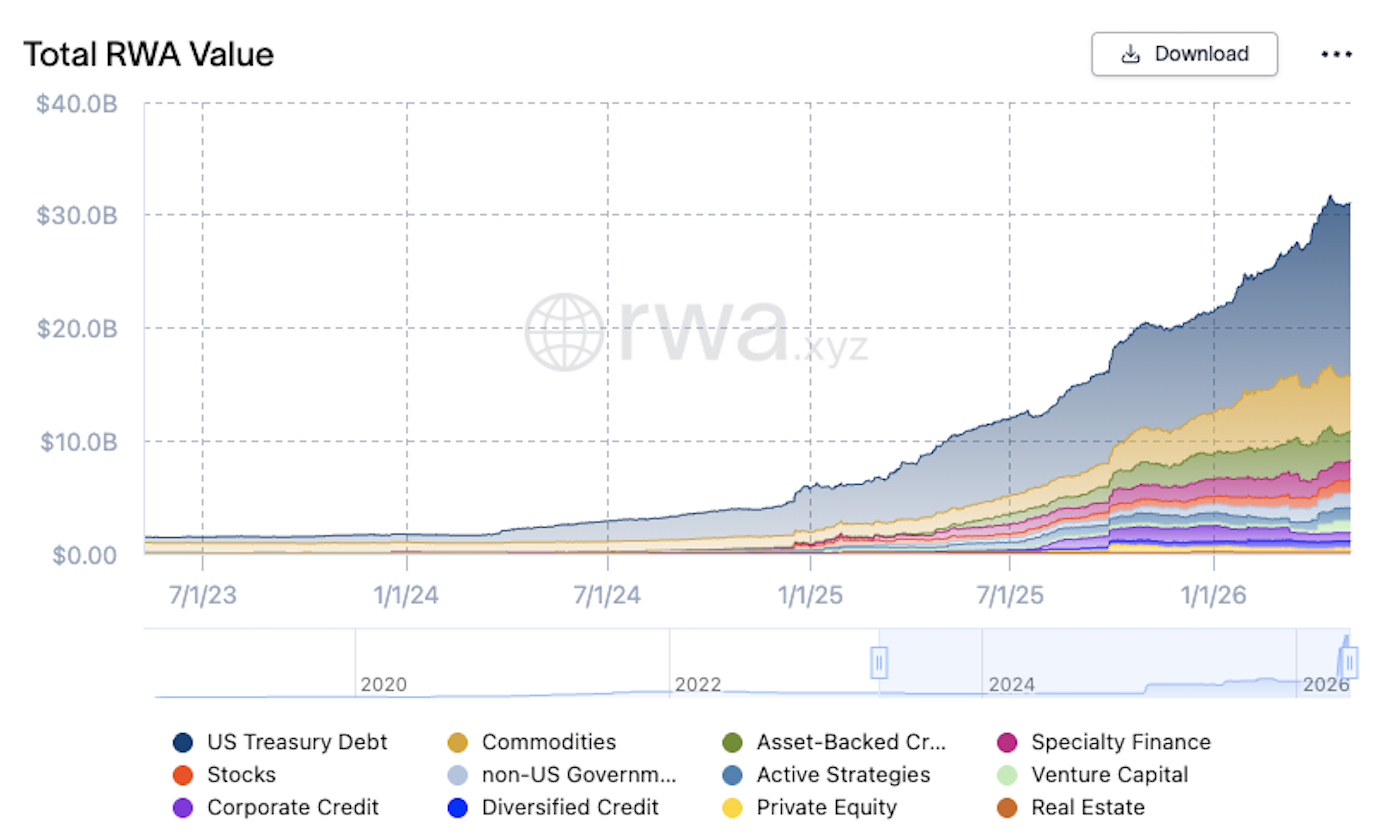
Based on our projections in 2025, we previously estimated that the Real-World Asset market could grow threefold and potentially reach $30 trillion within the next five years. Today, those signals are becoming increasingly clear. According to data from rwa.xyz, the total value of real-world assets tokenized on blockchain has officially surpassed $30 billion for the first time, reflecting the rapid pace of growth across the sector and suggesting that the market could potentially reach the $30 trillion level sooner than previously expected.


Total Value RWA Market May 2026


Global financial institutions are beginning to take RWA and the movement of real-world assets onto blockchain more seriously. What makes this trend particularly important is not only the increase in market value, but also the types of assets that are increasingly moving on-chain, ranging from US Treasuries and private credit to commodities, real estate, and investment funds. This reflects how tokenization is gradually being viewed as infrastructure for asset management within the digital economy, rather than simply another segment of the crypto market.


Blockchain Is Becoming Core Infrastructure for RWA Growth


The recent expansion of the RWA market reflects more than rising market value. It highlights the growing importance of blockchain and tokenization as organizations bringing assets on-chain and investors seeking exposure to these asset classes continue expanding at the same time. As the market grows, institutions may increasingly begin looking for blockchain networks capable of supporting this level of scale and long-term growth.


The market is now seeing a growing supply of real-world assets entering on-chain systems, alongside increasing demand from participants looking for investment structures that can connect more efficiently with digital financial infrastructure.


What is happening today represents a structural shift within financial markets. Investment systems are beginning to require infrastructure that can support real-time ownership management, improve coordination between multiple parties, and enable digital rights management from the beginning of the asset lifecycle.


SIX Network Is Preparing for Institutional-Scale Asset Expansion


SIX Network has been closely following this direction and continues preparing the SIX Protocol ecosystem to support the long-term growth of real-world assets on blockchain. This includes scalability development, digital asset infrastructure, and systems designed to support enterprise-level adoption.


Over the past several years, SIX Network has been actively discussing and collaborating with multiple partners on bringing real-world assets onto blockchain through SIX Protocol. As institutional-grade assets increasingly move into on-chain systems, blockchain infrastructure capabilities become more important across areas such as network stability, ownership management, investor data coordination, and long-term scalability.


Currently, the total asset value on SIX Protocol stands at approximately $90 million following the integration of SiriHub2 assets worth more than 2.49 billion THB onto the SIX Network blockchain ecosystem throughout the past year and into the first quarter of this year. Moving forward, SIX Network will continue developing infrastructure to support additional assets entering the ecosystem over time.


As the value of tokenized assets continues expanding globally, the industry narrative is gradually shifting toward infrastructure. Over the long term, one of the most important considerations for organizations will be identifying the right blockchain network to support real-world assets on-chain for their projects.


The question now is which blockchain infrastructure will be able to support the growth of those assets at an institutional level and over the long term.


The answer is in SIX Protocol: https://sixprotocol.com/

Follow every update at
Website: https://six.network/
X: https://x.com/theSIXnetwork
FB: https://www.facebook.com/thesixnetwork/


And our community channels:

Discord: http://discord.gg/sixnetwork
Telegram: https://t.me/+0BmqYVoV5j5lN2Jl


• Read the full SIX Network Roadmap 2026: Click

• SIX Network Q1 2026 Summary: Read

⎯⎯⎯⎯⎯⎯⎯⎯⎯⎯⎯⎯⎯⎯⎯⎯⎯⎯⎯⎯⎯⎯⎯⎯⎯⎯⎯⎯⎯⎯⎯⎯

Disclaimer:

1.This article is intended for informational purposes only. Please conduct your own research before making any investment decisions related to cryptocurrencies 2. Cryptocurrency and digital token involve high risk; investors may lose all investment money and should study information carefully and make investments according to their own risk profile.


Don’t miss out follow us at:

Warisara Thepsiri
Warisara Thepsiri

Experience the magic of Blockchain with SIX Network!

Related Posts

Why We’re Bringing Real-World Assets onto Blockchain

Why We’re Bringing Real-World Assets onto Blockchain

Bringing real-world assets on chain

Over the past decade, the global financial system has rapidly shifted toward digitalization. Cross-border transfers that once took several days can now be completed within minutes. Mobile banking and e-wallet payments have become part of everyday life for hundreds of millions of people around the world. Yet while payment infrastructure has evolved quickly, the infrastructure behind asset ownership has moved much more slowly.


The World Is Transitioning Into a Digital Economy

Even as the world enters the digital economy era, many assets are still managed through processes that rely heavily on paperwork, intermediaries, and fragmented databases. Ownership transfers still take time, verification often requires multiple parties, and reconciliation between organizations continues to create operational costs, especially for complex assets such as real estate, private funds, or assets involving multiple stakeholders.


In many cases, these inefficiencies do not come from the assets themselves, but from the infrastructure used to manage them. Much of today’s financial infrastructure was designed for a world that was far less interconnected than it is now.


This is one reason why blockchain has started to be viewed differently in recent years. Rather than being seen purely as infrastructure for cryptocurrencies, blockchain is increasingly being explored as a shared infrastructure layer for managing ownership and the movement of assets in a digital economy.


Why Global Institutions Are Paying More Attention to Tokenization

Signals of this shift are becoming more visible at the institutional level. A report from McKinsey & Company estimates that the tokenized asset market could reach approximately $2 trillion by 2030, even under a conservative scenario. Meanwhile, Boston Consulting Group (BCG) previously estimated that tokenized assets could grow into a $16 trillion market within the next decade, representing nearly 10% of global GDP.


What matters about these figures is not only the market size itself, but the fact that major financial institutions and global organizations are increasingly viewing tokenization as a long-term infrastructure trend rather than simply another crypto product category.


What is particularly notable is that this transition is no longer limited to the Web3 industry. Banks, financial institutions, and regulators have all begun experimenting with tokenization across various forms of real-world assets, including bonds, investment funds, and real estate. In many cases, the goal is not to create more tokens, but to reduce the operational friction surrounding how assets are issued, transferred, managed, and verified.


Blockchain Is Changing More Than Transactions

When ownership records move onto blockchain infrastructure, several things begin to change simultaneously. Asset data becomes easier to verify in real time. Ownership transfers can happen without relying on multiple layers of manual processes. The rules and conditions attached to assets can also become programmable from the start.


In practice, this creates opportunities to reduce long-term operational costs while improving coordination between multiple parties involved in the asset lifecycle, including issuers, custodians, investors, and regulators.

Another area gaining attention is accessibility. Traditionally, many forms of investment were available only to large investors because of high minimum capital requirements and rigid ownership structures. Once ownership is represented digitally, however, the same assets can potentially be divided into smaller units more efficiently, creating more flexible forms of participation and investment access.


In this context, blockchain is not simply changing how transactions occur. It is changing how ownership itself can be structured, managed, and exchanged.


Why Bring Real-World Assets Onto Blockchain?

The answer is not necessarily about blockchain itself, but about what organizations increasingly need from modern asset infrastructure.

As financial systems become more digital and interconnected, organizations are looking for systems that can:


• provide more transparent ownership structures,

• enable real-time coordination between multiple parties,

• reduce operational complexity,

• and support more flexible forms of asset management over time.


Real estate provides one practical example. In traditional systems, investing in real estate often involves high entry barriers, fragmented ownership records, and operationally heavy management processes. Once ownership structures become digital, however, the same assets can potentially support fractional ownership models, more efficient investor management, and programmable rights tied directly to the asset itself.


In this sense, blockchain is not necessarily replacing existing systems altogether. Instead, it is emerging as a new infrastructure layer that helps make asset management more connected, transparent, and adaptable to a digital economy.


The Real Challenge of Tokenization

As organizations move deeper into tokenization initiatives, many are discovering that the most difficult challenges are not purely technological.


Bringing real-world assets onto blockchain involves far more than deploying smart contracts. It also requires asset structuring, investor rights management, compliance frameworks, governance design, integration with existing organizational systems, and lifecycle management after issuance.


In many ways, the token itself is only the final output of a much larger process.


The more difficult challenge is building the operational layer that allows real-world assets to function reliably between off-chain systems and on-chain infrastructure.


This is why many organizations are beginning to focus less on blockchain as a transaction tool, and more on the infrastructure frameworks that enable tokenization to operate systematically in real production environments.


SIX Garage and the Role of
Real-World Asset Tokenization

SIX Garage - Garage of Tokenization


Within the ecosystem of SIX Network, this approach is being developed through SIX Garage, a framework specifically designed for Real-World Asset tokenization.


If SIX Protocol serves as the underlying blockchain infrastructure, SIX Garage functions as the operational layer that helps organizations bring real-world assets onto blockchain in a more structured and manageable way. This includes asset structuring, governance configuration, token holder management, compliance design, token issuance systems, and post-issuance asset administration.


This framework has already been applied through projects such as KAVALON and SiriHub2, reflecting how tokenization is gradually moving beyond experimental pilots and toward infrastructure that can support real organizational use cases.


In many ways, what is happening today may not simply be the growth of digital assets, but the gradual transformation of ownership infrastructure itself, from fragmented systems into more connected, transparent, and interoperable digital frameworks.


And in the long run, this transition may not be driven by the platforms generating the most attention, but by the infrastructure layers capable of helping real-world assets move into digital systems in a practical and sustainable way.


Interested in bringing real-world assets onto blockchain?
Talk to us at: https://zeeg.me/sixnetwork

Follow every update at
Website: https://six.network/
X: https://x.com/theSIXnetwork
FB: https://www.facebook.com/thesixnetwork/


And our community channels:

Discord: http://discord.gg/sixnetwork
Telegram: https://t.me/+0BmqYVoV5j5lN2Jl


• Read the full SIX Network Roadmap 2026: Click

• SIX Network Q1 2026 Summary: Read

⎯⎯⎯⎯⎯⎯⎯⎯⎯⎯⎯⎯⎯⎯⎯⎯⎯⎯⎯⎯⎯⎯⎯⎯⎯⎯⎯⎯⎯⎯⎯⎯

Disclaimer:

1.This article is intended for informational purposes only. Please conduct your own research before making any investment decisions related to cryptocurrencies 2. Cryptocurrency and digital token involve high risk; investors may lose all investment money and should study information carefully and make investments according to their own risk profile.


Don’t miss out follow us at:

Warisara Thepsiri
Warisara Thepsiri

Experience the magic of Blockchain with SIX Network!

Related Posts

SIX Network Full Ecosystem Explained

SIX Network Full Ecosystem Explained

SIX Network Full Ecosystem Explained
Get to know and explore the full ecosystem of SIX Network
which goes beyond just a token and forms the core foundation that drives our growth

Since SIX Network first launched in 2018

It has been 8 years of building blockchain infrastructure and developing new projects, including our current focus on RWA Tokenization. Many people may know us through SIX Token, which is one of the key components that powers innovation within the ecosystem. However, the token is only one part of the system. There are multiple core components working together, enabling SIX Network to grow, scale, and evolve sustainably.


Today, the ecosystem consists of 6 main pillars: SIX Protocol, SIX Token, SIX Bridge, SIX Scan, SIX Garage, and Pas.ss


In this article, we will take a closer look at each component, why it matters, and what SIX is building across these six pillars.


1. SIX Protocol
Starting with SIX Protocol, the core blockchain infrastructure of SIX Network that acts as the foundation for everything we build.


SIX Protocol is currently a Layer 1 blockchain with full EVM compatibility, designed to support scalability and long term growth, including use cases for enterprises and institutional organizations.


More importantly, SIX Protocol plays a critical role in enabling RWA Tokenization. It supports various types of real world assets that need to be brought on chain. In terms of development, we also have SIX Garage, a tokenization framework designed for organizations that want to tokenize assets. SIX Protocol works as the core framework alongside Garage, allowing tokenization projects to be executed in a structured and compliant manner.


SIX Protocol is essential to the ecosystem in terms of transparency and verification. All transactions can be audited on chain, and tokenization processes can be structured systematically. Even Pas.ss, our on chain privilege management platform, operates on top of SIX Protocol.


2. SIX Token
The native cryptocurrency of SIX Network that acts as the primary fuel of the entire ecosystem.


Many people know SIX Token as a tradable asset on exchanges, but its real role is as a utility token embedded across different processes within SIX Protocol, from being used as gas fees for on chain transactions to participating in ecosystem governance.


What makes SIX Token different from typical tokens is that its value is tied to real usage within the ecosystem, not just market sentiment. As more assets are tokenized through SIX Garage and more organizations adopt SIX Protocol, transaction volume on the network increases, which naturally drives demand for SIX Token as the system gas.


From a development perspective, SIX Token is directly connected to all parts of the ecosystem, including SIX Protocol as the main network, SIX Bridge for cross chain processes, and Pas.ss where tokens are used to unlock certain privileges. These connections make SIX Token more than just a project token. It is a fundamental part of the system that enables everything to function.


3. SIX Bridge
The layer that enables assets and data to move securely and verifiably across different networks.


SIX Bridge is a cross chain infrastructure that connects SIX Network with other blockchain ecosystems, making it easier for users to interact with SIX across multiple supported networks.


For enterprises and institutions, this is highly practical because they do not need to rebuild everything from scratch on SIX. They can gradually connect from their existing chains, reducing friction in real world adoption.


SIX Bridge works closely with SIX Protocol and plays an important role especially in the context of RWA Tokenization, where certain assets may require liquidity or interoperability with larger ecosystems. This is a direction we continue to develop as part of our 2026 roadmap.


4. SIX Scan
The blockchain explorer of SIX Network that allows anyone to verify everything happening on SIX Protocol in real time.


Transparency is a fundamental requirement for RWA Tokenization. Investors and institutions need to be able to verify that assets exist, that transactions are valid, and that all on chain data reflects reality.


SIX Scan serves this role by enabling users, whether retail investors, financial institutions, or partners, to view transactions, track tokenized assets, and monitor wallet activities directly on SIX Protocol without relying on intermediaries.


As SIX Garage continues to produce more tokenized assets, SIX Scan becomes even more important as a trust layer that strengthens the credibility of the entire ecosystem. It is an essential component that cannot be separated from the overall structure.


5. SIX Garage
A tokenization framework designed specifically for enterprises and institutions that want to bring real world assets on chain.


If SIX Protocol is the infrastructure, SIX Garage is the process that transforms real world assets into tokenized assets from start to finish. It covers everything from asset structuring, compliance and governance design, smart contract deployment on SIX Protocol, to post launch management of holder rights.


What makes SIX Garage practically important is that it is not just a tool, but a customizable framework that can be adapted to meet the specific requirements of each organization. This is a key factor for institutions when choosing blockchain infrastructure.


KAVALON and SiriHub2 are two of the first projects that have gone through the tokenization process on SIX Garage, and both exist on chain today as real production assets, not just pilot projects. More recently, AssetWise selected SIX Network to develop the system for AQUAROUS Token, demonstrating how SIX Garage and SIX Protocol continue to support real institutional projects.


6. Pas.ss
A digital privilege management system that allows organizations to create and manage membership and benefits on chain.


The problem Pas.ss solves already exists in everyday systems. Most membership and privilege programs today operate on centralized databases managed separately by each organization. This makes privileges difficult to verify, not transparent, and dependent on whether the organization continues to grant them.


Pas.ss shifts this structure onto blockchain, making privileges verifiable, manageable, and independent of centralized control.


Like all components in the ecosystem, Pas.ss operates on SIX Protocol and is directly connected to SIX Garage in the context of RWA Tokenization. After assets are tokenized, organizations need to manage holder rights and privileges, which Pas.ss supports seamlessly. A clear example is AQUAROUS Token by AssetWise, where privilege management is developed alongside asset tokenization.


In terms of future development, Pas.ss has strong potential to expand as a platform for digital membership, especially as digital assets and their associated privileges become more widely adopted.


All six components are not built separately, but are designed to work together as one system from the beginning.


Every time an organization uses SIX Garage to tokenize assets, the process runs on SIX Protocol, is verified through SIX Scan, manages privileges via Pas.ss, connects to other networks through SIX Bridge, and uses SIX Token throughout the entire flow. No part operates in isolation.


And that is what we mean when we say SIX Network is more than just a token. Every component has a purpose and a role within a much larger system.

Follow every update at
Website: https://six.network/
X: https://x.com/theSIXnetwork
FB: https://www.facebook.com/thesixnetwork/


And our community channels:

Discord: http://discord.gg/sixnetwork
Telegram: https://t.me/+0BmqYVoV5j5lN2Jl


• Read the full SIX Network Roadmap 2026: Click

• SIX Network Q1 2026 Summary: Read

⎯⎯⎯⎯⎯⎯⎯⎯⎯⎯⎯⎯⎯⎯⎯⎯⎯⎯⎯⎯⎯⎯⎯⎯⎯⎯⎯⎯⎯⎯⎯⎯

Disclaimer:

1.This article is intended for informational purposes only. Please conduct your own research before making any investment decisions related to cryptocurrencies 2. Cryptocurrency and digital token involve high risk; investors may lose all investment money and should study information carefully and make investments according to their own risk profile.


Don’t miss out follow us at:

Warisara Thepsiri
Warisara Thepsiri

Experience the magic of Blockchain with SIX Network!

Related Posts