fbpx

Dairy Cows Tokenized on Blockchain for Loan Collateral in Brazil

Dairy Cows Tokenized on Blockchain for Loan Collateral in Brazil

Dairy Cows Tokenized on Blockchain as Loan Collateral in Brazil

Before this, we shared the story of tokenizing Pokémon cards to use as loan collateral, a use case that worked because the asset could be graded and its current value verified. But Brazil just surprised us again, with news that farmers tokenized 10 dairy cows on the blockchain to use as loan collateral.


This happened at Fazenda Engenho Velho farm in Imbituva, Paraná state, Brazil, where a group of farmers did something no one had done before. They turned 10 dairy cows, worth roughly R$120,000 (about $23,000), into tokenized collateral, securing a first loan of R$100,000 (about $19,400) through a CPR-F, a Brazilian rural credit certificate that lets farmers borrow against livestock or agricultural output. Importantly, the deal was registered on B3, Brazil’s main stock exchange, marking the first time livestock has been formally accepted as financial collateral on a stock exchange.

Why Can a Cow Become Digital Collateral


The usual problem for small farmers is that banks are reluctant to accept livestock as collateral, since it’s hard to verify. It normally requires sending an inspector to the farm in person, and lenders typically discount the appraised value by as much as 60% to offset the risk, leaving farmers able to borrow far less than their herd is actually worth.


Cowmed, a Brazilian agtech startup, solved this by fitting each cow with a “Smarty Collar,” an AI powered sensor collar that continuously tracks health, behavior, and location in real time. That data is encrypted and tied to a unique digital ID for each cow on the blockchain, letting lenders verify an animal’s identity and condition at any time without visiting the farm, while also preventing the same cow from being pledged as collateral more than once.


The Opportunity for Tokenization in Agriculture


Cowmed already tracks over 100,000 cows across more than 1,000 farms in Brazil and neighboring countries, worth a combined R$2 billion (about $395 million). The company estimates that if 20% of farms in its network adopt this model, it could unlock as much as R$400 million (about $77.6 million) in new agricultural credit.


This is a clear example of how RWA tokenization isn’t limited to stocks, bonds, or gold. It’s reaching tangible assets that are part of everyday life for people working in agriculture, opening a window into how RWA tokenization is being developed worldwide to give people who lack access to traditional finance a real way to reach capital.


Follow every update at
Website: https://six.network/
X: https://x.com/theSIXnetwork
FB: https://www.facebook.com/thesixnetwork/


And our community channels:

Discord: http://discord.gg/sixnetwork
Telegram: https://t.me/+0BmqYVoV5j5lN2Jl

⎯⎯⎯⎯⎯⎯⎯⎯⎯⎯⎯⎯⎯⎯⎯⎯⎯⎯⎯⎯⎯⎯⎯⎯⎯⎯⎯⎯⎯⎯⎯⎯

Disclaimer:

1.This article is intended for informational purposes only. Please conduct your own research before making any investment decisions related to cryptocurrencies 2. Cryptocurrency and digital token involve high risk; investors may lose all investment money and should study information carefully and make investments according to their own risk profile.


Don’t miss out follow us at:

Warisara Thepsiri
Warisara Thepsiri

Experience the magic of Blockchain with SIX Network!

Related Posts

SIX Network Explores Gold-Backed Assets Amid the Growth of Tokenized Gold

SIX Network Explores Gold-Backed Assets Amid the Growth of Tokenized Gold

SIX Network Explores Gold-Backed Assets Amid the Growth of Tokenized Gold

Real-World Asset Tokenization, or RWA, has remained one of the key areas of focus for SIX Network. The potential of blockchain extends beyond the creation of new forms of digital assets. It can also be used to connect real-world assets with digital financial infrastructure in a more efficient and structured way.


One asset class that has been gaining significant attention is tokenized gold, or digital assets that are referenced to and backed by physical gold.


SIX Network is currently exploring the potential of Gold-Backed Assets through models that incorporate appropriate asset structures, custody arrangements, verification processes, and operations aligned with relevant regulatory and compliance requirements.

Why Tokenized Gold Is Worth Watching in 2026

Market data indicates that tokenized commodities are among the fastest-growing segments within the RWA sector.


The market value of tokenized commodities increased by approximately 289% during the reported period and has now surpassed USD 7 billion. Gold-backed assets such as XAUT and PAXG continue to account for a significant share of this market.


This growth reflects the strong suitability of gold for tokenization, particularly in areas such as fractional ownership, transfers, ownership verification, and integration with digital financial services.


In its traditional form, physical gold ownership may involve limitations related to storage, custody costs, transportation, and transfers across different locations.


Tokenized gold can allow holders to gain digital exposure to the value of gold without having to manage the physical asset directly for every transaction.


In Thailand, gold has long been a familiar asset, both as a form of savings and as a store of value.


Bringing gold into a properly structured digital environment could therefore serve as an important bridge between an asset that is already widely understood and the development of new digital financial infrastructure.


Expanding Asset Classes on SIX Protocol

One of SIX Network’s key directions this year is to expand the range of assets that can be supported and utilized on SIX Protocol, enabling a broader variety of RWA use cases.


The exploration of Gold-Backed Assets is therefore not simply about adding another asset type to the blockchain.


It is part of a broader effort to develop infrastructure capable of supporting multiple forms of real-world assets, covering processes such as asset issuance, rights management, data verification, and integration with related services and ecosystems.


However, growth in the value of assets brought on-chain alone may not be sufficient.


The future of RWA will also depend on the transparency of the underlying assets, liquidity, governance, and whether those assets can be used effectively in real-world financial applications.


For this reason, SIX Network believes that the future of tokenized gold should not be measured only by the number of tokens issued.


Its long-term success will depend on the quality of the infrastructure connecting real-world assets, service providers, and users in a reliable and transparent manner.


This exploration represents another step in SIX Network’s efforts to identify opportunities in the RWA sector and prepare SIX Protocol to support a wider variety of real-world assets in the future.

Follow every update at
Website: https://six.network/
X: https://x.com/theSIXnetwork
FB: https://www.facebook.com/thesixnetwork/


And our community channels:

Discord: http://discord.gg/sixnetwork
Telegram: https://t.me/+0BmqYVoV5j5lN2Jl

⎯⎯⎯⎯⎯⎯⎯⎯⎯⎯⎯⎯⎯⎯⎯⎯⎯⎯⎯⎯⎯⎯⎯⎯⎯⎯⎯⎯⎯⎯⎯⎯

Disclaimer:

1.This article is intended for informational purposes only. Please conduct your own research before making any investment decisions related to cryptocurrencies 2. Cryptocurrency and digital token involve high risk; investors may lose all investment money and should study information carefully and make investments according to their own risk profile.


Don’t miss out follow us at:

Warisara Thepsiri
Warisara Thepsiri

Experience the magic of Blockchain with SIX Network!

Related Posts

RWA เข้าสู่จุดเปลี่ยนครั้งสำคัญ เมื่อ DTCC เปิดตัวโครงการ Tokenization ร่วมกับองค์กรระดับโลกกว่า 40 แห่ง

RWA เข้าสู่จุดเปลี่ยนครั้งสำคัญ เมื่อ DTCC เปิดตัวโครงการ Tokenization ร่วมกับองค์กรระดับโลกกว่า 40 แห่ง

RWA Enters a Major Turning Point as DTCC Launches a Tokenization Initiative with More Than 40 Global RWA Partners

ตลาด Real-World Asset หรือ RWA Tokenization กำลังเดินเข้าสู่จุดเปลี่ยนครั้งสำคัญอีกครั้ง หลังจาก DTCC ซึ่งเป็นหนึ่งในโครงสร้างพื้นฐานหลักของตลาดทุนสหรัฐฯ เริ่มดำเนินธุรกรรม Production Trades ด้วยหลักทรัพย์สหรัฐฯ ที่ถูก Tokenize และมีแผนเปิดโครงการ Tokenized Securities ในเดือนตุลาคม โดยมีสถาบันการเงินชั้นนำเกือบ 40 แห่งเข้าร่วมในช่วงเริ่มต้น


รายชื่อผู้เข้าร่วมที่ถูกกล่าวถึงประกอบด้วย BlackRock, Vanguard, JPMorgan, Goldman Sachs และผู้เล่นรายใหญ่อื่น ๆ ของ Wall Street ขณะที่สินทรัพย์ในโครงการครอบคลุมทั้งหุ้น กองทุน และพันธบัตรรัฐบาลสหรัฐฯ


ข่าวนี้จึงไม่ได้เป็นเพียงการเปิดตัวอีกหนึ่งโปรเจกต์ด้าน Blockchain แต่เป็นสัญญาณสำคัญว่าธุรกิจกกลุ่ม Tokenization กำลังเคลื่อนจากพื้นที่ทดลอง เข้าสู่โครงสร้างพื้นฐานของตลาดการเงินจริง


ทำไมการเคลื่อนไหวของ DTCC จึงสำคัญต่อระบบนิเวศของ RWA

DTCC ไม่ใช่ Startup ด้าน Blockchain หรือแพลตฟอร์มซื้อขายสินทรัพย์ดิจิทัล แต่เป็นองค์กรที่ทำหน้าที่อยู่เบื้องหลังระบบ clearing, settlement และโครงสร้างข้อมูลหลักทรัพย์จำนวนมหาศาลของตลาดทุนในสหรัฐฯ


เมื่อองค์กรที่อยู่ในแกนกลางของตลาดทุนเริ่มนำ Tokenized Securities มาใช้กับธุรกรรมจริง ความหมายจึงแตกต่างจากการทำ Proof of Concept ทั่วไป เพราะนี่คือการทดสอบว่าเทคโนโลยี Tokenization สามารถทำงานร่วมกับระบบการเงินเดิมได้จริงหรือไม่


การทำ Production Trades ครั้งแรกด้วยหลักทรัพย์สหรัฐฯ ที่ถูก Tokenize แสดงให้เห็นว่า Blockchain กำลังถูกนำไปใช้กับ Workflow ที่มีอยู่แล้ว เช่น

• การบริหารหลักประกัน
• ธุรกรรมพันธบัตรรัฐบาล
• ธุรกรรมหุ้น
• Securities Lending
• Margin Management
• การโอนและการชำระราคาระหว่างสถาบัน


ในบริบทนี้ tokenization จึงไม่ใช่เรื่องของการสร้างสินทรัพย์ใหม่เพื่อการเก็งกำไร แต่เป็นการปรับปรุงวิธีที่สินทรัพย์เดิมถูกบันทึก เคลื่อนย้าย ตรวจสอบ และนำไปใช้ภายในระบบการเงิน


จากสินทรัพย์ดิจิทัลสู่สินทรัพย์ที่ใช้งานได้จริง

ในช่วงแรกของตลาด RWA หลายโครงการมุ่งเน้นไปที่การนำข้อมูลของสินทรัพย์มาแสดงบน Blockchain หรือสร้าง Token เพื่อเป็นตัวแทนของสินทรัพย์จริง


อย่างไรก็ตาม Tokenization ในระดับสถาบันต้องไปไกลกว่านั้น สินทรัพย์ที่ถูก Tokenize ต้องสามารถนำไปใช้ในกระบวนการทางการเงินจริง เช่น ใช้เป็นหลักประกัน โอนระหว่างผู้ดูแลสินทรัพย์ เชื่อมต่อกับสภาพคล่อง หรือรับชำระแบบอัตโนมัติภายใต้เงื่อนไขที่กำหนดไว้ล่วงหน้า


นี่คือเหตุผลที่ความร่วมมือระหว่าง DTCC และ Chainlink มีความน่าสนใจ เพราะสะท้อนให้เห็นว่าอนาคตของ RWA ไม่ได้ขึ้นอยู่กับ Blockchain เพียงเครือข่ายเดียว แต่ต้องอาศัย Infrastructure ที่ช่วยเชื่อมข้อมูล สินทรัพย์ ระบบการเงินเดิม และหลายเครือข่ายที่มีมาตรฐานเข้าด้วยกัน


เมื่อ Tokenized Asset สามารถเคลื่อนย้ายและถูกนำไปใช้ในหลาย Workflow ได้อย่างปลอดภัย มูลค่าของ Tokenization จะไม่ได้มาจากการมี Token อยู่บนเชนเท่านั้น แต่มาจากความสามารถของสินทรัพย์นั้นในการทำงานได้ตลอดทั้ง lifecycle


Wall Street กำลังเคลื่อนสู่ On-chain แต่ไม่ใช่การแทนที่ระบบเดิมในทันที

การที่ JPMorgan, Goldman Sachs, BlackRock, Vanguard และผู้เล่นรายใหญ่เริ่มเข้าร่วมโครงการ Tokenization ไม่ได้หมายความว่าตลาดทุนแบบเดิมจะถูกแทนที่ในทันที


สิ่งที่กำลังเกิดขึ้นมีลักษณะเป็นการนำ Blockchain เข้าไปเสริมระบบการเงินเดิมทีละส่วน โดยเริ่มจากพื้นที่ที่สามารถสร้างประสิทธิภาพได้ชัดเจน เช่น การลดขั้นตอนของ Settlement การลดการกระทบยอดข้อมูลระหว่างหลายฝ่าย การบริหารหลักประกันแบบ Real-time และการทำให้สินทรัพย์สามารถเคลื่อนย้ายได้อย่างเป็นระบบมากขึ้น


ในระยะยาว ระบบการเงินอาจไม่ได้แบ่งออกเป็น “Traditional Finance” และ “On-chain Finance” อย่างชัดเจนเหมือนในปัจจุบัน แต่จะค่อย ๆ เชื้อมเข้าหากันผ่าน Infrastructure ที่ทำให้สถาบันสามารถใช้ประโยชน์จาก Blockchain ได้อย่างมีประสิทธิภาพโดยยังคงปฏิบัติตามกฎระเบียบและมาตรฐานเดิม


นี่คือสิ่งที่ทำให้ RWA มีแนวโน้มอยู่ได้ในระยะยาว เพราะการเติบโตไม่ได้ขึ้นอยู่กับกระแสของตลาดคริปโตเพียงอย่างเดียว แต่เชื่อมโยงกับความต้องการปรับปรุงระบบการเงินที่มีมูลค่าธุรกรรมจริงอยู่แล้ว


RWA กำลังเปลี่ยนจากตลาดของ Asset Issuance สู่ตลาดของ Infrastructure

ในช่วงที่ผ่านมา การแข่งขันในตลาด RWA มักถูกวัดจากจำนวนสินทรัพย์ที่ถูก Tokenize หรือมูลค่าของสินทรัพย์ที่ถูกนำขึ้น On-chain


แต่เมื่อผู้เล่นระดับสถาบันเข้ามามากขึ้น ปัจจัยที่จะชี้วัดความสำเร็จอาจเปลี่ยนไปเป็นเรื่องของ Infrastructure ได้แก่

• ระบบการออกและบริหารสินทรัพย์

• การยืนยันตัวตนและสิทธิของผู้ถือ
• Compliance และการควบคุมการโอน
• การเชื่อมต่อข้อมูลจากโลกจริง
• Cross-chain Interoperability
• การบริหารสินทรัพย์และผู้ถือครองตลอดวงจรชีวิต
• การเชื่อมต่อกับระบบ Settlement, Custody และตลาดรอง


สถาบันไม่ได้ต้องการเพียง Token แต่ต้องการระบบที่สามารถรองรับสินทรัพย์จริง ภาระทางกฎหมาย และธุรกรรมในระดับธุรกิจได้ครบถ้วน


SIX Network เตรียมตัวอย่างไรในฐานะ RWA Infrastructure

สำหรับ SIX Network การเคลื่อนไหวของ DTCC เป็นการยืนยันแนวทางที่ตลาดกำลังเดินไป คือ RWA จะไม่ได้จบอยู่ที่การออก Token แต่ต้องมีโครงสร้างพื้นฐานที่ทำให้สินทรัพย์สามารถถูกนำไปใช้งานจริง


บทบาทของ SIX Network จึงไม่ใช่เพียงการเป็น Blockchain สำหรับบันทึกธุรกรรม แต่คือการพัฒนาองค์ประกอบที่จำเป็นต่อการนำสินทรัพย์จริงเข้าสู่ระบบดิจิทัล ตั้งแต่การออกและบริหาร Token การจัดการสิทธิและข้อมูลของผู้ถือ การเชื่อมต่อกับ Use Case ภายนอก ไปจนถึงการสร้างประสบการณ์ที่องค์กรและผู้ใช้งานทั่วไปสามารถเข้าถึงได้


ทิศทางการเตรียม Infrastructure สำหรับตลาดระยะต่อไปควรให้ความสำคัญกับ 4 ด้านหลัก

1. Institutional-ready Tokenization

ระบบต้องรองรับสินทรัพย์ที่มีเงื่อนไขซับซ้อนได้ ไม่ว่าจะเป็นการจำกัดผู้ถือ การกำหนดสิทธิ การควบคุมการโอน และการปฏิบัติตามข้อกำหนดด้านกฎหมาย ของแต่ละตลาด


2. Asset Lifecycle Management

Tokenization ไม่ควรจบที่วันออก Token แต่ต้องรองรับการบริหารข้อมูล การแจกจ่ายสิทธิประโยชน์ การโอน การไถ่ถอน การรายงาน จนตลอดถึงการเปลี่ยนแปลงที่จะเกิดขึ้นตลอดอายุของสินทรัพย์

3. Interoperability และการเชื่อมต่อระบบเดิม

สินทรัพย์ของสถาบันจะไม่ได้อยู่บนระบบเดียวทั้งหมด Infrastructure จึงต้องสามารถเชื่อมต่อหลายเครือข่าย รวมถึงเชื่อมกับระบบ custody, payment และฐานข้อมูลเดิมขององค์กร


4. User Experience ที่ลดความซับซ้อนของ Blockchain

การใช้งานในวงกว้างจะเกิดขึ้นได้เมื่อผู้ใช้งานไม่จำเป็นต้องคำนึงถึง wallet, gas fee หรือขั้นตอนทางเทคนิคทั้งหมด ระบบ Tokenization จึงต้องถูกออกแบบให้ใช้งานได้ใกล้เคียงกับประสบการณ์การใช้งานผลิตภัณฑ์ทางการเงินทั่วไปที่ผู้ใช้มีความคุ้นเคยจากประสบการณ์การใช้งาน


จุดเปลี่ยนที่สำคัญไม่ใช่แค่ Wall Street ใช้ Blockchain แต่คือ Blockchain กำลังเข้าไปอยู่ใน Workflow ของ Wall Street

ข่าวของ DTCC แสดงให้เห็นว่า Tokenization ไม่ได้อยู่ในช่วงที่ต้องพิสูจน์อีกต่อไปว่า Blockchain สามารถเป็นตัวแทนของสินทรัพย์ได้หรือไม่


คำถามใหม่คือ Infrastructure แบบใดที่จะสามารถรองรับสินทรัพย์ การกำกับดูแล สภาพคล่อง และธุรกรรมระหว่างสถาบันได้ในระยะยาว


การที่ผู้เล่นอย่าง BlackRock, Vanguard, JPMorgan และ Goldman Sachs เริ่มเข้าร่วมไม่ได้หมายความว่า RWA จะเติบโตเป็นเส้นตรง หรือทุกโครงการจะประสบความสำเร็จ แต่เป็นหลักฐานว่าตลาดทุนกำลังให้ความสำคัญกับโครงสร้างพื้นฐานประเภทนี้อย่างจริงจัง


สำหรับผู้พัฒนา RWA Infrastructure นี่คือช่วงเวลาที่ต้องเตรียมระบบให้พร้อมก่อนที่ความต้องการใช้งานจริงจะขยายตัวมากขึ้น เพราะเมื่อสินทรัพย์ของสถาบันเริ่มเคลื่อนตัวเข้าสู่ระบบ On-chain การแข่งขันจะไม่ได้อยู่ที่ว่าใครพูดถึง Tokenization ก่อน แต่อยู่ที่ว่าใครมี Infrastructure ที่สามารถรองรับการใช้งานจริงได้ตอบโจทย์การใช้งานอย่างครบถ้วน และน่าเชื่อถือที่สุด


Wall Street กำลังเคลื่อนสู่ On-chain แต่สิ่งที่จะทำให้การเปลี่ยนผ่านนี้เกิดขึ้นได้จริง คือโครงสร้างพื้นฐานที่เชื่อมสินทรัพย์ กฎระเบียบ สถาบัน และผู้ใช้งานเข้าด้วยกัน

เรียนรู้เพิ่มเติมเกี่ยวกับ SIX Network:

Website l Telegram l Twitter l Facebook l Discord l Medium


หมายเหตุ:

1. บทความนี้จัดทำขึ้นเพื่อวัตถุประสงค์ในการให้ข้อมูลเท่านั้น และไม่ถือเป็นคำแนะนำด้านการลงทุน โปรดศึกษาข้อมูลและทำการวิเคราะห์ด้วยตนเองก่อนตัดสินใจลงทุนในคริปโทเคอร์เรนซี

2. คริปโทเคอร์เรนซีและโทเคนดิจิทัลเป็นสินทรัพย์ที่มีความเสี่ยงสูง ผู้ลงทุนอาจสูญเสียเงินลงทุนทั้งหมดได้ โปรดศึกษาข้อมูลให้รอบคอบและลงทุนให้เหมาะสมกับระดับความเสี่ยงที่ท่านยอมรับได้

Don’t miss out follow us at:

Warisara Thepsiri
Warisara Thepsiri

Experience the magic of Blockchain with SIX Network!

Related Posts

RWA Enters a Major Turning Point as DTCC Launches a Tokenization with More 40 Global Partners

RWA Enters a Major Turning Point as DTCC Launches a Tokenization with More 40 Global Partners

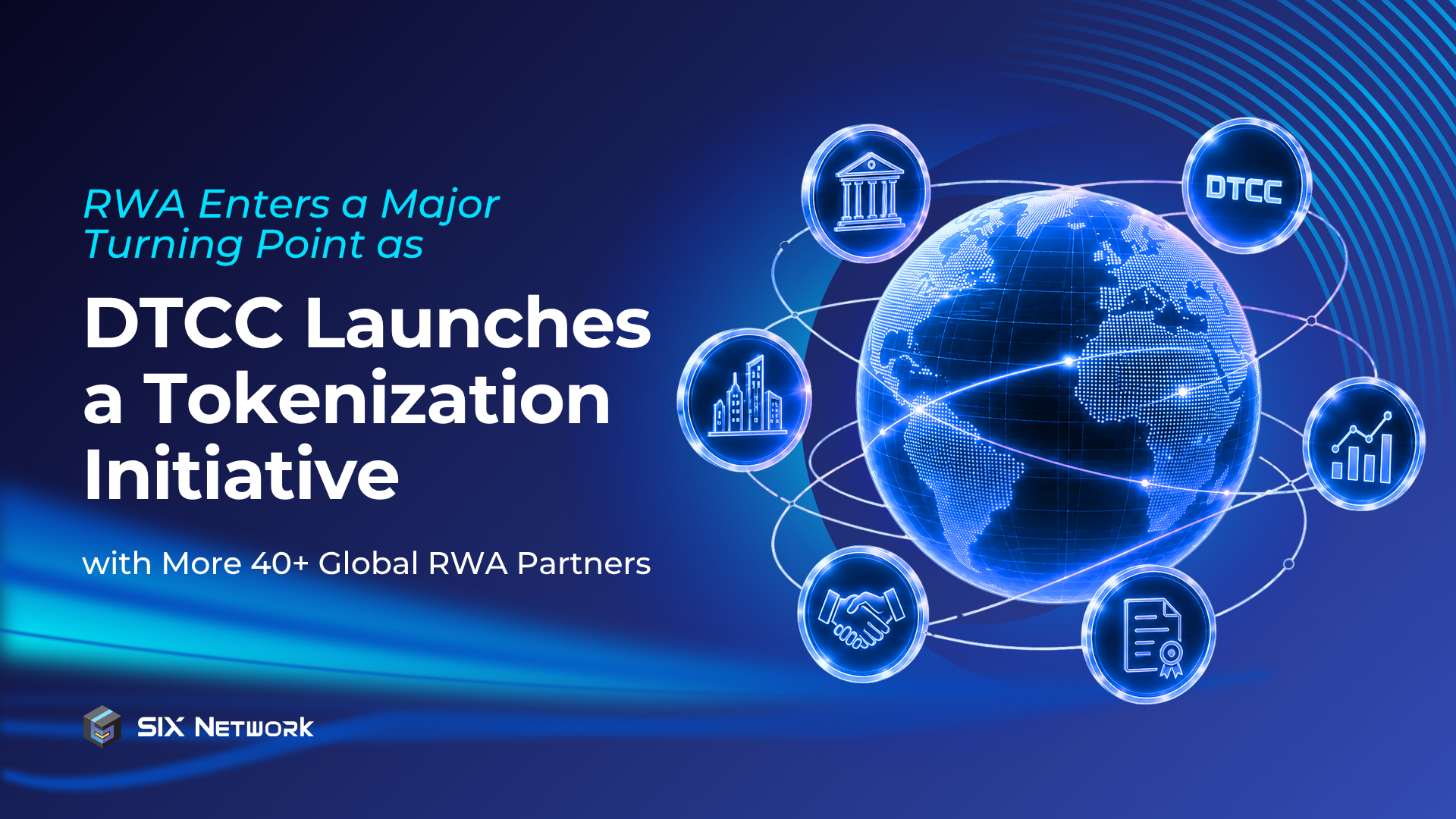
RWA Enters a Major Turning Point as DTCC Launches a Tokenization Initiative with More Than 40 Global RWA Partners

The Real-World Asset, or RWA Tokenization market, is entering another major turning point after DTCC, one of the core infrastructures of the U.S. capital market, began conducting Production Trades using tokenized U.S. securities and announced plans to launch a Tokenized Securities initiative in October, with nearly 40 leading financial institutions joining in the initial phase.


The list of participants mentioned includes BlackRock, Vanguard, JPMorgan, Goldman Sachs, and other major Wall Street players, while the assets covered in the initiative include equities, funds, and U.S. Treasury securities.


This news is therefore not simply the launch of another blockchain project. It is a clear signal that Tokenization is moving from an experimental space into the infrastructure of the real financial market.


Why DTCC’s Move Matters for RWA

DTCC is not a blockchain startup or a digital asset trading platform. It is an organization that operates behind the scenes of the U.S. capital market’s clearing, settlement, and securities data infrastructure at massive scale.


When an organization at the core of the capital market begins using Tokenized Securities in real transactions, the meaning is different from a typical Proof of Concept. This is a test of whether Tokenization technology can actually work with the existing financial system.


The first Production Trades using tokenized U.S. securities show that blockchain is being applied to existing workflows, such as:

• Collateral management

• U.S. Treasury transactions
• Equity transactions
• Securities lending
• Margin management
• Transfers and settlement between institutions


In this context, Tokenization is not about creating new assets for speculation. It is about improving how existing assets are recorded, transferred, verified, and used within the financial system.


From Digital Assets to Assets That Can Actually Work

In the early stage of the RWA market, many projects focused on bringing asset information onto blockchain or creating tokens to represent real-world assets.


However, institutional-level Tokenization has to go further than that. Tokenized assets must be usable in real financial processes, such as being used as collateral, transferred between custodians, connected to liquidity, or settled automatically under predefined rules.


This is why the collaboration between DTCC and Chainlink is interesting. It shows that the future of RWA does not depend on a single blockchain network, but on infrastructure that can connect data, assets, legacy systems, and multiple networks together.


When a tokenized asset can move and be used across multiple workflows securely, the value of tokenization will not come from simply having a token on-chain. It will come from the ability of that asset to function throughout its full lifecycle.


Wall Street Is Moving On-chain, but It Is Not Replacing the Traditional Instantly

The fact that JPMorgan, Goldman Sachs, BlackRock, Vanguard, and other major players are beginning to join Tokenization initiatives does not mean that traditional capital markets will be replaced immediately.


What is happening is the gradual integration of blockchain into existing financial systems, starting with areas where efficiency gains are clear, such as reducing settlement steps, reducing reconciliation between multiple parties, enabling real-time collateral management, and allowing assets to move in a more systematic way.


In the long term, the financial system may no longer be clearly divided between “Traditional Finance” and “On-chain Finance” in the same way it is today. Instead, the two may gradually converge through infrastructure that allows institutions to benefit from blockchain while still complying with existing regulations and standards.


This is what gives RWA long-term potential. Its growth does not depend only on crypto market narratives, but is connected to the need to improve financial systems that already handle real transaction value.


RWA Is Moving from an Asset Issuance Market to an Infrastructure Market

Until now, competition in the RWA market has often been measured by the number of assets tokenized or the total value of assets brought on-chain.


But as more institutional players enter the market, the factors that determine success may shift toward infrastructure, including:

• Asset issuance and management systems

• Identity and holder rights verification
• Compliance and transfer controls
• Real-world data connectivity
• Cross-chain interoperability
• Asset and holder lifecycle management
• Connections to settlement, custody, and secondary markets


Institutions do not only need tokens. They need systems that can fully support real-world assets, legal obligations, and business-level transactions.


How SIX Network Is Preparing as RWA Infrastructure

For SIX Network, DTCC’s move confirms the direction the market is moving toward: RWA will not end at token issuance. It requires infrastructure that enables assets to be used in practice.


The role of SIX Network is therefore not only to be a blockchain for recording transactions, but to develop the components needed to bring real-world assets into digital systems, from token issuance and management, holder rights and data management, and connections to external use cases to creating experiences that organizations and general users can actually access.


The direction for preparing infrastructure for the next phase of the market should focus on 4 key areas.


1. Institutional-ready Tokenization

Systems must be able to support assets with complex conditions, including holder restrictions, rights configuration, transfer controls, and compliance requirements across different markets.


2. Asset Lifecycle Management

Tokenization should not end on the day a token is issued. It must support data management, benefit distribution, transfers, redemption, reporting, and changes throughout the asset’s lifecycle.


3. Interoperability and Legacy System Connectivity

Institutional assets will not all exist within a single system. Infrastructure must therefore be able to connect across multiple networks, as well as with custody systems, payment systems, and existing enterprise databases.


4. User Experience That Reduces Blockchain Complexity

Mass adoption can happen when users do not need to understand wallets, gas fees, or every technical step. Tokenization systems must be designed to feel closer to general financial products.


The Key Turning Point Is Not That Wall Street Is Using Blockchain, but That Blockchain Is Entering Wall Street’s Workflows

DTCC’s news shows that tokenization is no longer at the stage where it needs to prove whether blockchain can represent assets.


The new question is what kind of infrastructure can support assets, governance, liquidity, and inter-institutional transactions in the long term.


The participation of players such as BlackRock, Vanguard, JPMorgan, and Goldman Sachs does not mean that RWA will grow in a straight line or that every project will succeed. But it is evidence that capital markets are taking this type of infrastructure seriously.


For RWA infrastructure developers, this is the period to prepare systems before real demand expands further. Once institutional assets begin moving on-chain, the competition will no longer be about who talked about Tokenization first. It will be about who has the infrastructure that can support real-world usage most completely and credibly.


Wall Street is moving on-chain. But what will make this transition possible is the infrastructure that connects assets, regulation, institutions, and users together.

Learn more about SIX Network:

Website l Telegram l Twitter l Facebook l Discord l Medium


Disclaimer:

1. This article is intended for informational purposes only. Please conduct your own research before making any investment decisions related to cryptocurrencies


2. Cryptocurrency and digital token involve high risk; investors may lose all investment money and should study information carefully and make investments according to their own risk profile.

Don’t miss out follow us at:

Warisara Thepsiri
Warisara Thepsiri

Experience the magic of Blockchain with SIX Network!

Related Posts

Breaking down the Robinhood Chain a blockchain built specifically for RWA

Breaking down the Robinhood Chain a blockchain built specifically for RWA

Breaking down the Robinhood Chain momentum: a blockchain built specifically for RWA

Imagine one of the most widely used stock trading apps in America, Robinhood, deciding to build its own blockchain from scratch, so people can trade stocks like Apple or Nvidia around the clock, no longer bound by stock market opening and closing hours.


From America’s favorite stock trading app to a blockchain outpacing Ethereum in volume


Robinhood launched Robinhood Chain on July 1, positioned clearly as a blockchain built specifically to support RWA tokenization, the process of bringing real-world assets onto a blockchain. It runs as an Ethereum Layer 2 network on Arbitrum Orbit technology. The response exceeded expectations from week one: the total value of assets on the chain grew from $10 million to $100 million within a single week, and total asset market cap on the chain crossed $420 million within days of launch.


As of July 12, Robinhood Chain’s value reached $878 million, making it the world’s second-largest chain by daily trading volume, overtaking major rivals like Ethereum, the pioneering blockchain of the industry, and Base, the blockchain built by Coinbase, one of the largest crypto trading apps. That’s a fast climb for a chain that had only been live for 11 days.


Analyzing Robinhood Chain’s growth in value

The rapid rise in total assets on the chain comes largely from Morpho, a crypto lending app, which accounts for $90 million of the $100 million total. As for the trading volume that pushed past Ethereum, Hayden Adams, founder of Uniswap, one of the industry’s largest crypto trading apps, revealed that 99.5% of that volume came from his app alone. The most heavily traded assets were mostly “meme coins,” tokens with no underlying business or real value behind them, traded purely on hype, like CASHCAT, which surged more than 1,100% in a single day.


Why did Robinhood build its own chain specifically for RWA

Vlad Tenev, CEO of Robinhood, has placed such weight on RWA that he’s repeated this conviction across multiple media appearances within a short span. It started on July 2, when he told CNBC, a major US financial news outlet, “I believe the future of crypto is in real-world assets. If an asset isn’t tied to underlying utility, it isn’t a productive asset. What’s the benefit of making a million different meme coins?” He added, “Everything that is running on traditional rails will eventually become on-chain tokenized.”


Those comments were picked up widely by crypto and financial media, including CoinDesk, Cointelegraph, and Bloomingbit. Just a few days later, on July 8, he reiterated the same conviction in a post on X: “While we’re building Robinhood chain to be the best chain for RWA… it works great for memes too.” His comments reflect a view that assets with real value behind them, like stocks, bonds, or real estate, represent the long-term direction of the crypto industry.


Shifting strategy from service provider to owning the infrastructure itself

Another reason, as analyzed by crypto industry outlet ChainCatcher, comes down to control over the business. Previously, Robinhood directed users to trade through other companies’ blockchains, making itself just an access channel. Having its own chain lets Robinhood control the entire trading process, settlement, collateral, and yield across its various assets, shifting its position from a service provider to a direct owner of financial infrastructure.


These reasons line up with what’s happening across the industry right now, as major financial institutions like BlackRock increasingly move into tokenization. The total RWA market currently stands at roughly $63.9 billion, with Citigroup projecting it could grow to $5.5 trillion by 2030.


Several major global chains are turning their attention toward RWA around the same period, a direction SIX Network has recognized and has been building RWA tokenization infrastructure across the SEA region for several years as well.


On the other hand, Robinhood already has an existing user base of over 28 million people using its app, giving it instant access to tokenized stocks without needing to download a new app, an advantage no other chain starts with. Chainlink, the system that feeds real-world asset prices into the blockchain, was integrated from day one, infrastructure that’s necessary for making tokenized stocks credible.


The coming weeks will be the real test of how much tokenized stock trading volume can replace the meme coin activity driving the numbers today.

Learn more about SIX Network:

Website l Telegram l Twitter l Facebook l Discord l Medium


Disclaimer:

1. This article is intended for informational purposes only. Please conduct your own research before making any investment decisions related to cryptocurrencies


2. Cryptocurrency and digital token involve high risk; investors may lose all investment money and should study information carefully and make investments according to their own risk profile

Don’t miss out follow us at:

Warisara Thepsiri
Warisara Thepsiri

Experience the magic of Blockchain with SIX Network!

Related Posts

Meet Tokenized Equities, Before Wall Street Fully Moves On-Chain

Meet Tokenized Equities, Before Wall Street Fully Moves On-Chain

Get To Know Tokenized Equitites

Tokenized Equities: the on-chain stock category that grew several times over in a single year


In a Real-World Assets market where private credit and US Treasuries usually dominate the conversation, another category is closing the gap fast: Tokenized Equities, stocks issued as tokens on a blockchain. The trend just got a lot harder to ignore after ICE, the parent company of the New York Stock Exchange, committed $200 million into the space, a clear sign that mainstream capital markets are paying attention.


Tokenized Equities take shares from traditional exchanges, think Tesla, Nvidia, Alphabet, and issue them as digital tokens on-chain, each backed 1:1 by the underlying share through a regulated custodian. That structure lets investors trade around the clock instead of being limited to exchange hours, hold fractional positions, and move tokens across platforms in real time, a sharp contrast to traditional equities, which are bound by trading hours and settlement cycles that can take days.


What’s new

The category went from having almost no footprint in 2024 to visible, active trading by early 2026. Ondo Finance, through its Global Markets platform, holds roughly 60% of the market. It has also partnered with Franklin Templeton to tokenize five ETFs, and teamed up with Broadridge to let holders of tokenized stocks and ETFs vote the shareholder rights tied to the underlying assets.


Larger institutions are moving too. ICE put $200 million into OKX, with plans to bring NYSE-listed stocks onto its X Layer chain in tokenized form during the second half of 2026. DTCC, which clears and safekeeps over $114 trillion in US securities, has started piloting tokenized securities trading with more than 50 financial institutions, with a possible full commercial rollout by October 2026.


Current market size

RWA.xyz puts the total value of Tokenized Equities at around $960 million as of March 2026, up sharply from roughly $424 million in mid-2025. That’s still under 5% of the broader $20 billion Tokenized RWA market.


But with growth north of 2,000% over the past year, a number of industry voices now see this as the year Tokenized Equities breaks out, a signal that mainstream capital markets infrastructure is starting to move on-chain in earnest.


Role of SIX Network

The rapid growth of Tokenized Equities in global markets reflects the same problem SIX has already built infrastructure to solve: making traditional assets, whether stocks, real estate, or debt instruments, easier to access and trade, without requiring a full overhaul of existing systems.


What Ondo did with Franklin Templeton, letting token holders vote the shareholder rights tied to the underlying asset, is a concrete example of what Cap Table Tracking in SIX Garage is built to support: keeping ownership and holder entitlements accurate and verifiable even after a tokenized asset changes hands on-chain.


That leaves the infrastructure ready to scale if demand for tokenizing stocks or other assets in the region grows in line with this global trend.

Learn more about SIX Network:

Website l Telegram l Twitter l Facebook l Discord l Medium


Disclaimer:

1. This article is intended for informational purposes only. Please conduct your own research before making any investment decisions related to cryptocurrencies


2. Cryptocurrency and digital token involve high risk; investors may lose all investment money and should study information carefully and make investments according to their own risk profile

Don’t miss out follow us at:

Warisara Thepsiri
Warisara Thepsiri

Experience the magic of Blockchain with SIX Network!

Related Posts

เจาะลึก Tokenized Equities หุ้นบนบล็อกเชนที่โตขึ้นหลายสิบเท่าในปีเดียว

เจาะลึก Tokenized Equities หุ้นบนบล็อกเชนที่โตขึ้นหลายสิบเท่าในปีเดียว

Get To Know Tokenized Equitites

Tokenized Equities หุ้นบนบล็อกเชนที่โตขึ้นหลายสิบเท่าในปีเดียว


ในตลาด Real-World Assets ที่ขยายตัวต่อเนื่อง สินทรัพย์ที่ถูกพูดถึงมากที่สุดมักเป็น private credit และ US Treasuries แต่ตอนนี้มีอีกหมวดหนึ่งที่กำลังไล่ตามมาติดๆ นั่นคือ Tokenized Equities หรือหุ้นที่ถูกแปลงเป็นโทเคนบนบล็อกเชน และล่าสุดกระแสนี้ยิ่งชัดเจนขึ้น เมื่อ ICE บริษัทแม่ของตลาดหลักทรัพย์นิวยอร์ก (NYSE) ทุ่มเงินลงทุนถึง 200 ล้านดอลลาร์เข้าสู่วงการนี้ สะท้อนว่าตลาดหุ้นกระแสหลักเริ่มจับตาเทรนด์นี้อย่างจริงจังแล้ว


Tokenized Equities คืออะไร คือการนำหุ้นในตลาดหลักทรัพย์ดั้งเดิม เช่น Tesla, Nvidia, Alphabet มาออกเป็นโทเคนดิจิทัลบนบล็อกเชน โดยแต่ละโทเคนมีหุ้นจริงหนุนหลังแบบ 1:1 ผ่านผู้ดูแลสินทรัพย์ (custodian) ที่ได้รับการกำกับดูแล ทำให้นักลงทุนซื้อขายได้ตลอด 24 ชั่วโมงโดยไม่ต้องผูกกับเวลาทำการของตลาดหุ้น สามารถถือเป็นเศษส่วนของหุ้นได้ (fractional ownership) และโอนย้ายข้ามแพลตฟอร์มได้แบบเรียลไทม์ ต่างจากหุ้นดั้งเดิมที่ติดข้อจำกัดเรื่องเวลาซื้อขายและกระบวนการชำระราคาที่ใช้เวลาหลายวัน


อัปเดตล่าสุด

ตลาดนี้เติบโตแบบก้าวกระโดด จากที่แทบไม่มีมูลค่าในปี 2024 มาเป็นตลาดที่มีการเคลื่อนไหวชัดเจนในช่วงต้นปี 2026 โดย Ondo Finance ผ่านแพลตฟอร์ม Global Markets ครองส่วนแบ่งราวๆ 60% ของตลาดทั้งหมด และยังได้จับมือกับ Franklin Templeton นำ ETF 5 กองทุนขึ้นโทเคน พร้อมร่วมกับ Broadridge ให้ผู้ถือโทเคนหุ้น/ETF สามารถโหวตสิทธิ์ของผู้ถือหุ้นที่อ้างอิงอยู่ได้


ฝั่งสถาบันขนาดใหญ่ก็ขยับตาม เช่น ICE บริษัทแม่ของ NYSE ที่ลงทุน 200 ล้านดอลลาร์ใน OKX พร้อมแผนนำหุ้นที่จดทะเบียนใน NYSE มาให้บริการแบบโทเคนผ่านเชน X Layer ในช่วงครึ่งหลังของปี 2026 ขณะที่ DTCC ซึ่งเป็นผู้เคลียร์และดูแลสินทรัพย์หลักทรัพย์สหรัฐฯ มูลค่ากว่า 114 ล้านล้านดอลลาร์ ก็เริ่มไพลอตทดสอบการซื้อขายหลักทรัพย์แบบโทเคนร่วมกับสถาบันการเงินกว่า 50 แห่ง ซึ่งอาจเปิดให้บริการเชิงพาณิชย์เต็มรูปแบบได้ภายในเดือนตุลาคม 2026


มูลค่าตลาดปัจจุบัน

ข้อมูลจาก RWA.xyz ระบุว่า มูลค่ารวมของ Tokenized Equities อยู่ที่ราว 960 ล้านดอลลาร์สหรัฐ ณ เดือนมีนาคม 2026 เพิ่มขึ้นอย่างมากจากราว 424 ล้านดอลลาร์เมื่อกลางปี 2025 แม้ตัวเลขนี้จะยังคิดเป็นสัดส่วนไม่ถึง 5% ของตลาด Tokenized RWA โดยรวมที่มีมูลค่าราว 20,000 ล้านดอลลาร์


แต่ด้วยอัตราการเติบโตที่สูงกว่า 2,000% ในรอบปีที่ผ่านมา ทำให้หลายฝ่ายในวงการมองว่านี่อาจเป็นปีแห่ง Tokenized Equities และเป็นสัญญาณว่าโครงสร้างพื้นฐานตลาดทุนกระแสหลักกำลังทยอยย้ายขึ้นบล็อกเชนอย่างจริงจัง


บทบาทของ SIX Network 

Tokenized Equities ที่กำลังโตแบบก้าวกระโดดในตลาดโลก สะท้อนโจทย์เดียวกับที่ SIX วางโครงสร้างพื้นฐานไว้รองรับอยู่แล้ว คือการทำให้สินทรัพย์ดั้งเดิม ไม่ว่าจะเป็นหุ้น อสังหาริมทรัพย์ หรือตราสารหนี้ เข้าถึงได้ง่ายขึ้น ซื้อขายได้คล่องตัวขึ้น โดยไม่ต้องรื้อระบบเดิมทั้งหมด


จุดที่ Ondo ทำกับ Franklin Templeton (ให้ผู้ถือโทเคนโหวตสิทธิ์ผู้ถือหุ้นอ้างอิงได้) เป็นตัวอย่างที่ตรงกับสิ่งที่ Cap Table Tracking ใน SIX Garage ถูกออกแบบมารองรับ คือการทำให้กรรมสิทธิ์และสิทธิประโยชน์ของผู้ถือสินทรัพย์ที่ tokenize แล้วยังคงถูกต้อง ตรวจสอบได้ แม้จะซื้อขายเปลี่ยนมือบนเชนไปแล้วก็ตาม


ทำให้พร้อมขยายต่อได้ทันทีถ้าความต้องการ tokenize หุ้นหรือสินทรัพย์ในภูมิภาคเพิ่มขึ้นตามเทรนด์โลกนี้

เรียนรู้เพิ่มเติมเกี่ยวกับ SIX Network:

Website l Telegram l Twitter l Facebook l Discord l Medium


หมายเหตุ:

1. บทความนี้จัดทำขึ้นเพื่อวัตถุประสงค์ในการให้ข้อมูลเท่านั้น และไม่ถือเป็นคำแนะนำด้านการลงทุน โปรดศึกษาข้อมูลและทำการวิเคราะห์ด้วยตนเองก่อนตัดสินใจลงทุนในคริปโทเคอร์เรนซี

2. คริปโทเคอร์เรนซีและโทเคนดิจิทัลเป็นสินทรัพย์ที่มีความเสี่ยงสูง ผู้ลงทุนอาจสูญเสียเงินลงทุนทั้งหมดได้ โปรดศึกษาข้อมูลให้รอบคอบและลงทุนให้เหมาะสมกับระดับความเสี่ยงที่ท่านยอมรับได้

Don’t miss out follow us at:

Warisara Thepsiri
Warisara Thepsiri

Experience the magic of Blockchain with SIX Network!

Related Posts